
Angel Island

My great-grandfather sailed into New York Harbor on July 4th. Not realizing the significance of the date, he thought all the fireworks and decorations were to welcome immigrants to the US. According to family lore, he thought they were for him.
I don’t think a similar mistake could’ve happened at Angel Island, the “Ellis Island of the West” in San Francisco Bay. While 2% of immigrants were turned away from Ellis Island, 18% were turned away from Angel Island, mostly due to the Chinese Exclusion Act and other racist immigration policies in the late 19th and early 20th centuries. It was not exactly a welcoming place.
Today, Angel Island is a state park, preserving a beautiful natural landscape and important American history. To get to Angel Island, you take a shabby ferry from the Ferry Building, out across the Bay, past Alcatraz, and around Angel Island to a little cove that faces the town of Tiburon in Marin County — I later learned this stretch of water is called Raccoon Strait (!). Technically, Angel Island is part of Tiburon, except for a little slice that belongs to San Francisco.
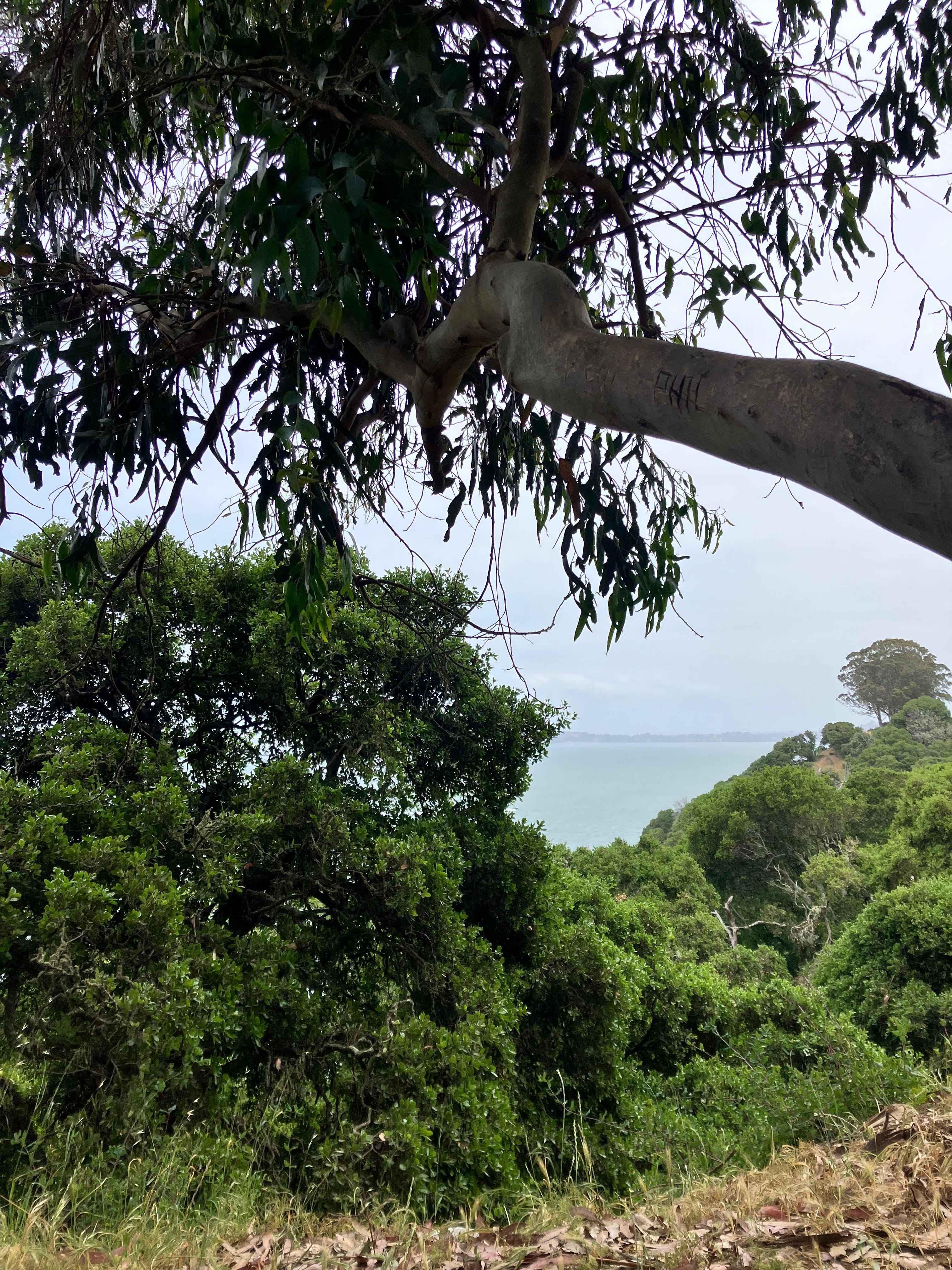
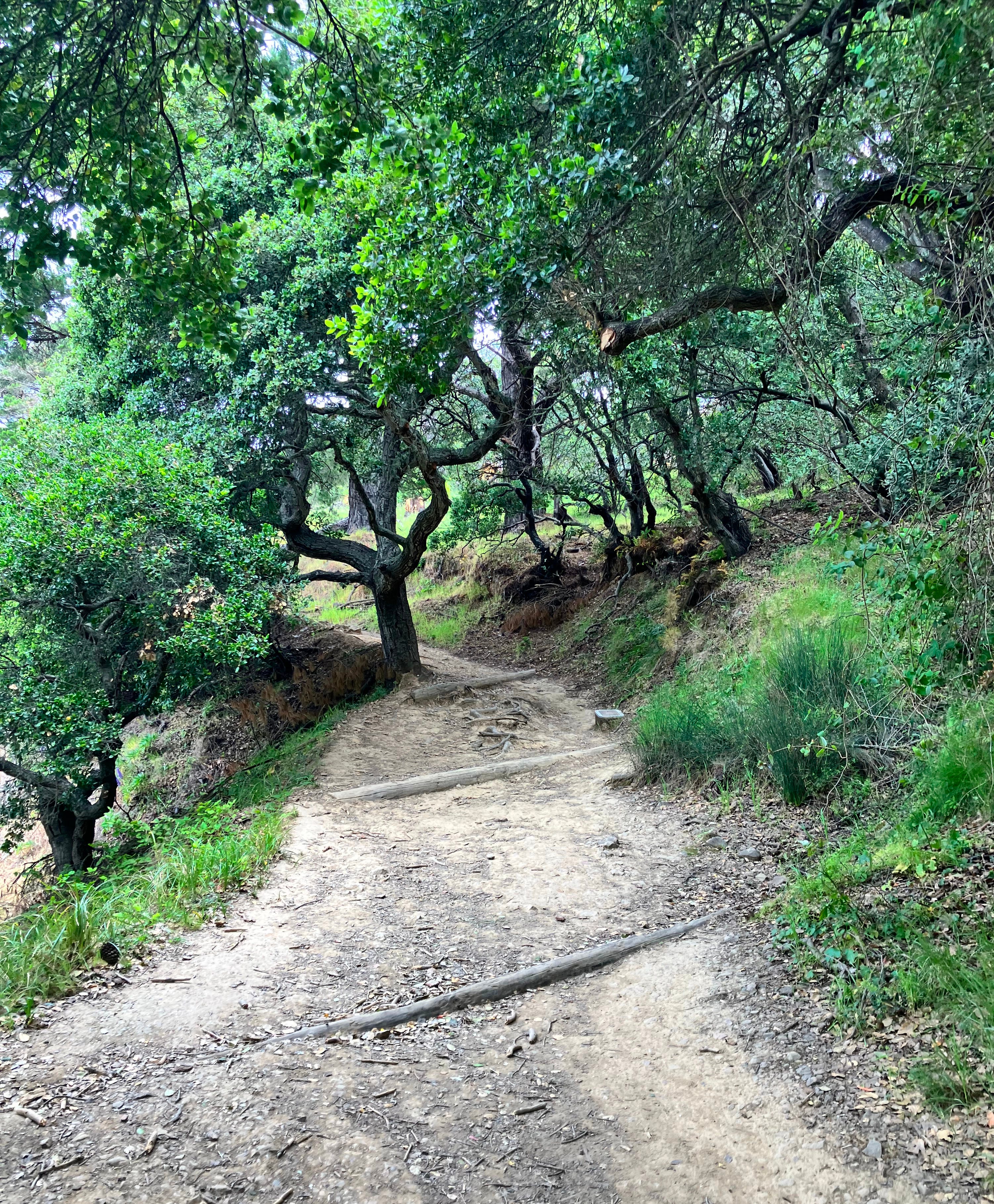
Andy and I disembarked, grabbed coffee at the little cafe by the ferry landing, and hit the trail. Angel Island is 1.2 square miles, and it feels like 95% of the island is hill. We went up a wonky series of dirt steps through the stubby oak landscape, occasionally splashed blue and purple with lupines, finally emerging on the road that circumnavigates the island.
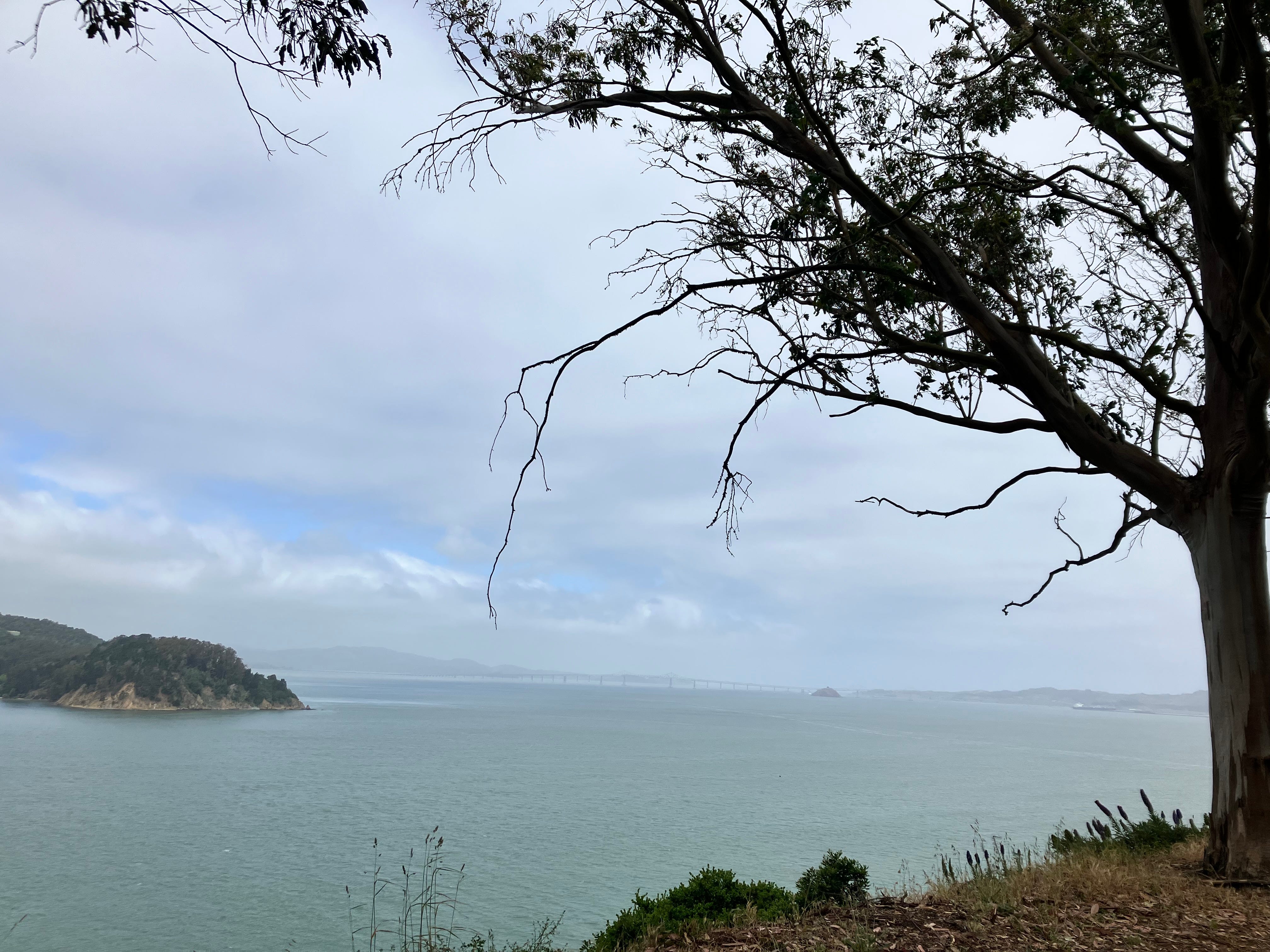
It wasn’t a particularly clear day, but you could see across to the hills of Tiburon, dense with ugly, boxy houses that must have incredible views. Further out was the the Richmond-San Rafael bridge, which connects the East Bay with Marin County. It’s not a pretty bridge — Frank Lloyd Wright said “it's the most awful thing I've ever seen,” while it was being built in the 1950s — and it’s a bit of a roller coaster to drive on, strangely crooked and undulating due to shipping channels, but the bridge has its charms.
We turned through gates into the area of the former Immigration Station, where boats full of people from all over the world landed in America. As was true at Ellis Island, first class passengers were usually processed on board the ships and allowed to go directly onward to San Francisco. All other passengers were detained on Angel Island, some for months, in cold and crowded rooms.
That detention center is now a museum. It’s an old an rickety building that was almost torn down in 1970. Poetry saved it.
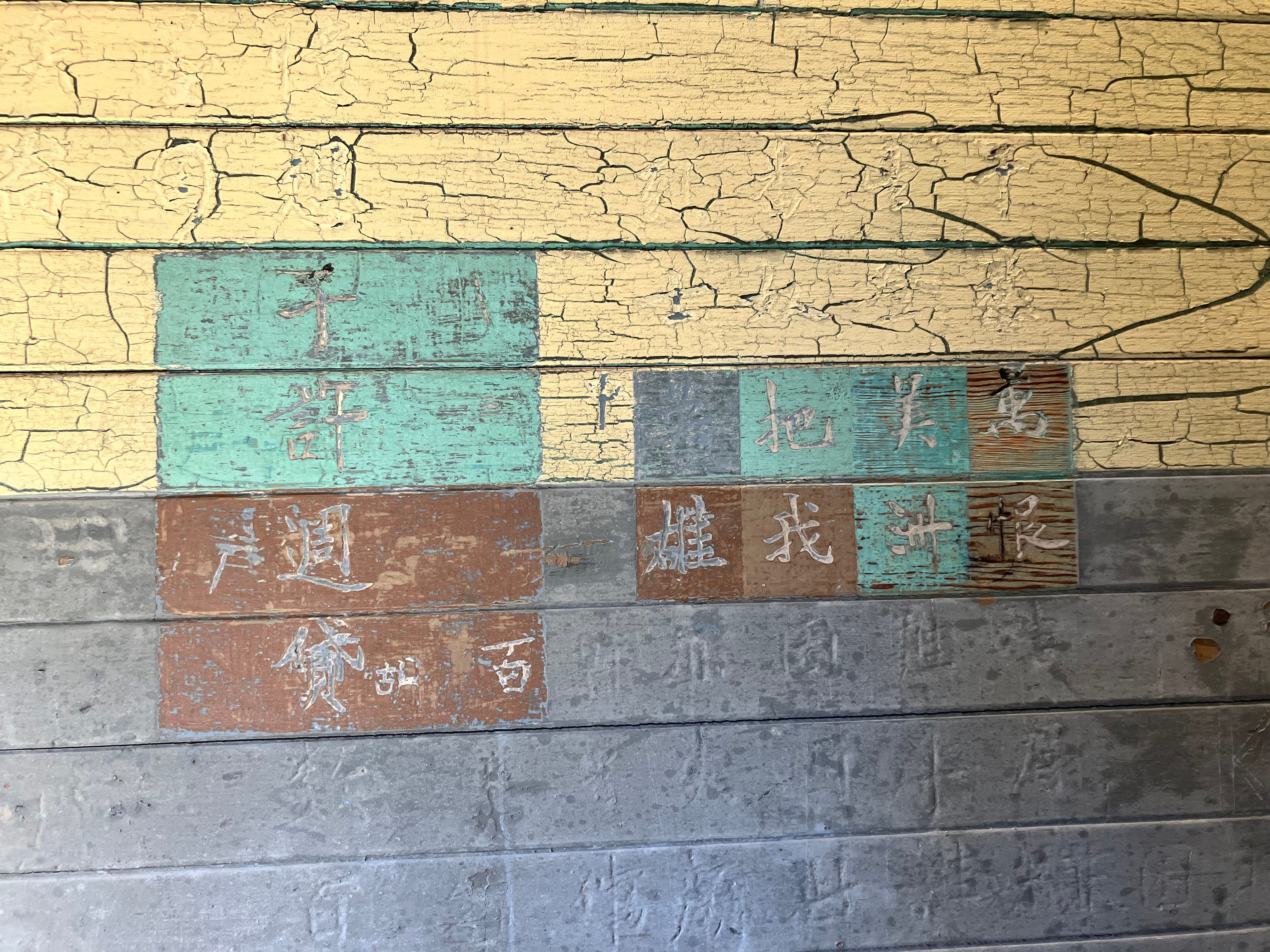
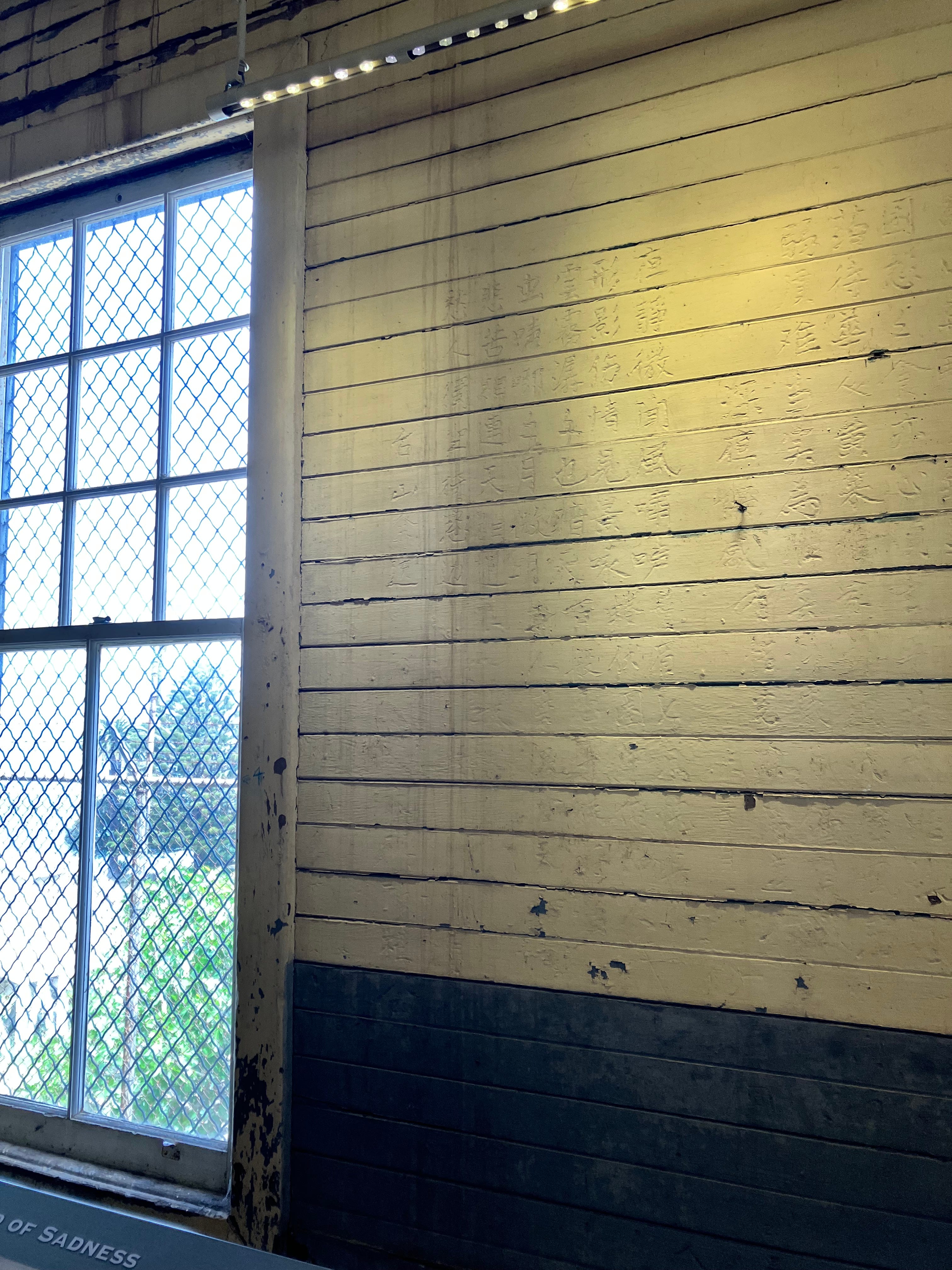
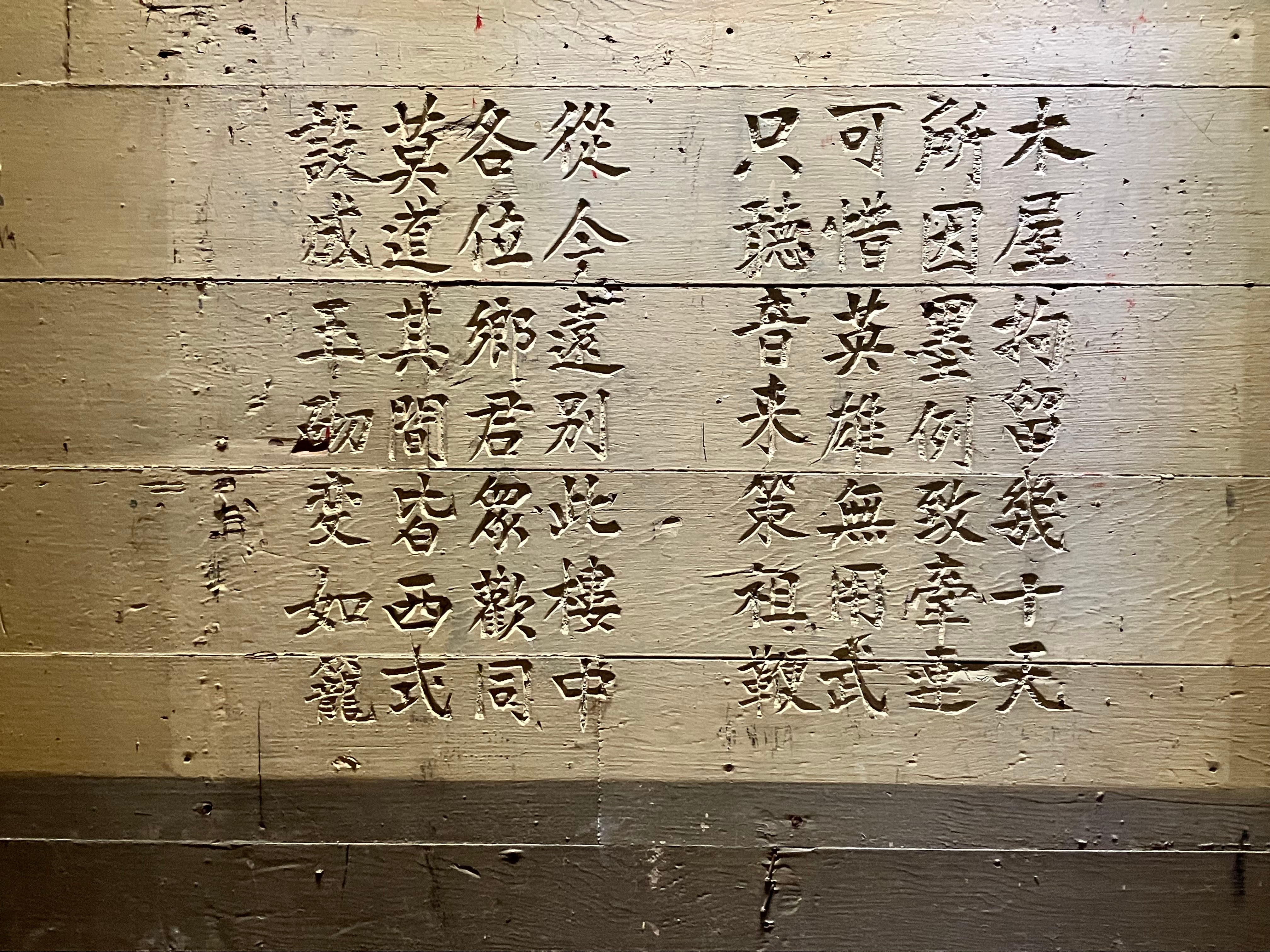
Chinese immigrants, who were detained there between 1910-1940, carved poetry into the walls. Poems of anguish, fear, hope, and protest. Guards would fill in the poetry with putty and paint over it, but new poems kept appearing. Layers of paint and poetry tell the story of Chinese migration to America, part of our long and ongoing history of cruel and racist immigration policy.
People from China represented the largest group of immigrants to pass through Angel Island, but there were people from everywhere — Korea, India, Switzerland, Russia, Portugal. A substantial number came from Japan, many of whom made it through the hardship of detention at Angel Island only to be interred in concentration camps after the start of World War II.
The detention station is on a hill that slopes down to a cove overlooking Tiburon. Freedom must have felt so close and so far. The poetry on the walls reflect those feelings. There’s something poignant about people turning to art during times of despair. Creating beautiful things in terrible places helped people survive. I’m so grateful to the activists and artists who fought to preserve this important part of our history.
We made our way out of the museum, finding a shady bench to eat lunch. The clouds had lifted, the Bay was sparkling. Walking back to the ferry landing, we encountered various hordes of school children on field trips. I’m glad they’re learning the full history of our country.
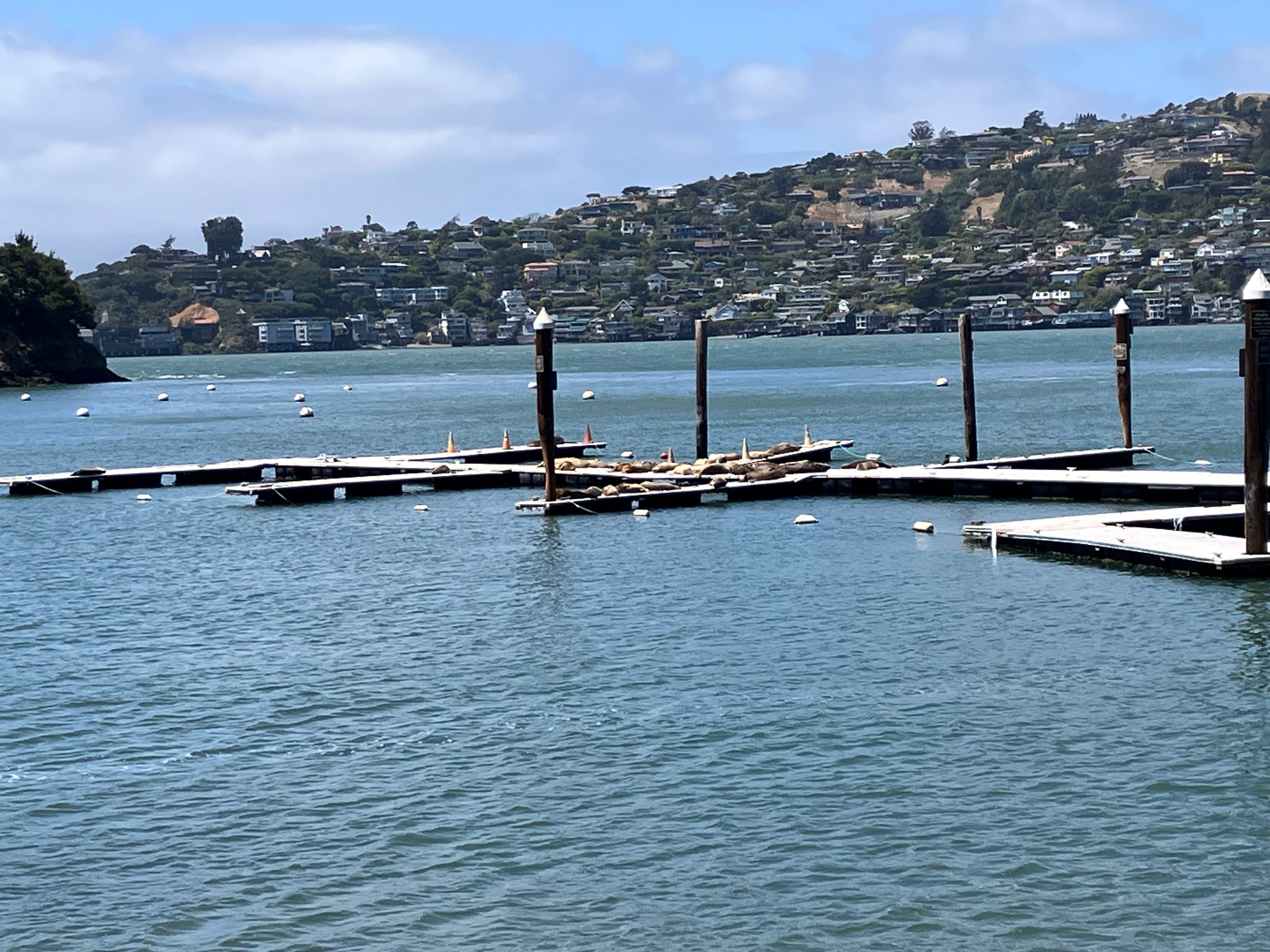
We found a sunny spot to wait for the ferry, with a view of the harbor seals lazily sunning themselves on the docks, occasionally snorting and harrumphing. I marveled at the stark contrast between the island’s natural beauty and its ugly history. The ferry chugged into the harbor and we boarded, ready to go home.
This is my first introduction to Angel Island. Thanks for sharing this piece of history.