
Folly

In the 1700s, rich people in Britain and France started including ornamental buildings in their gardens. Called follies, they usually had no other purpose than to look beautiful (though sometimes they had a practical purpose; there’s a delightful subcategory of folly called a tortoiserie, which, according to the Folly Fellowship, are “buildings in the shape of tortoises, or made to house tortoises”).
I first learned the term “folly” in San Francisco. Our Palace of Fine Arts is a modern-day version of a folly - it’s a fake Roman ruin in the Marina District. It was originally built for the Panama Pacific International Exposition in 1915, the World’s Fair that demonstrated San Francisco’s resilience in the wake of the devastating 1906 earthquake. While almost all of the other buildings built for the Fair were demolished, San Franciscans were very fond of the Palace and the lagoon and gardens surrounding it, so it stayed.
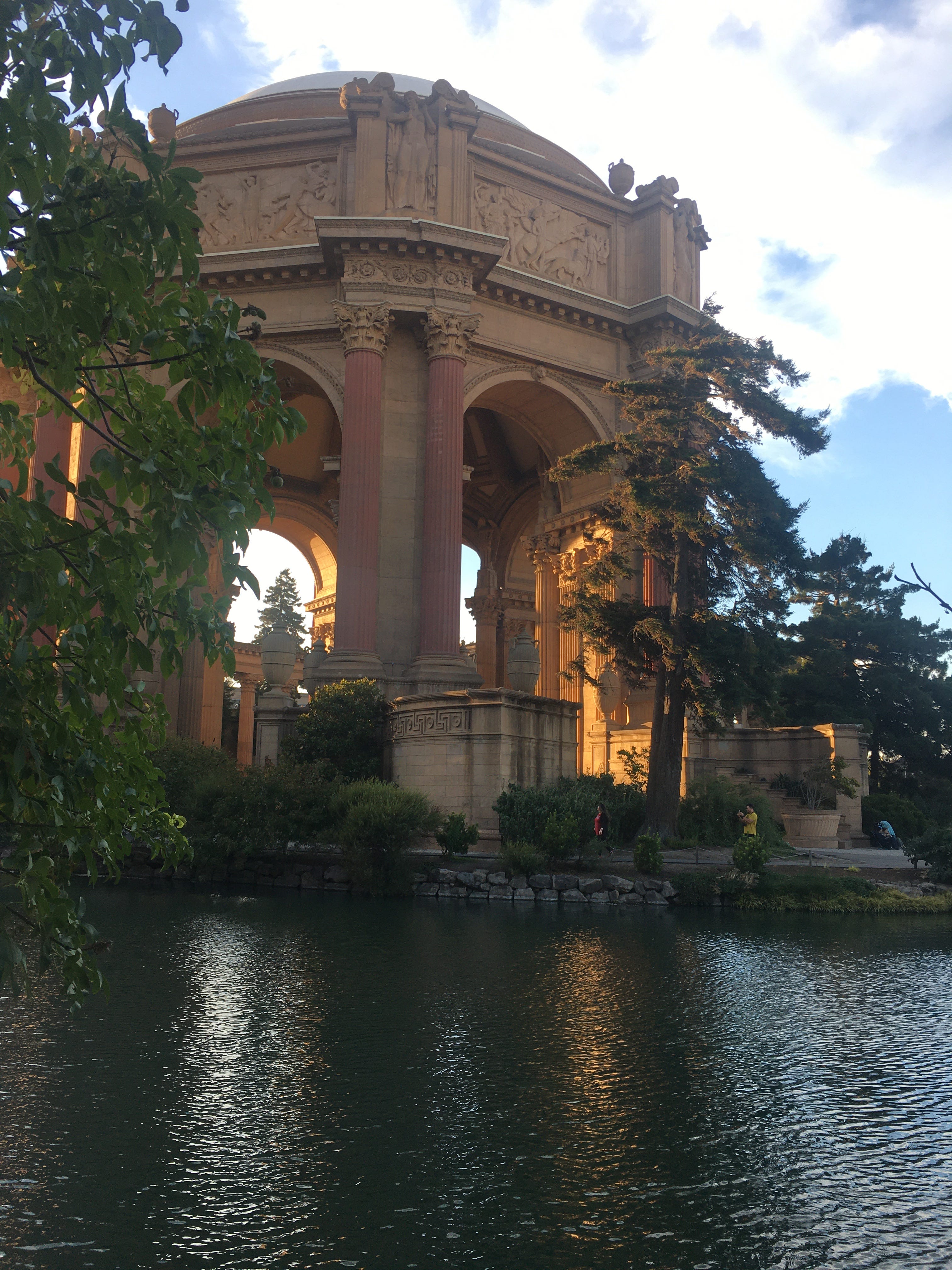
Because the Palace was supposed to be a temporary building, it was made of temporary materials which, by the 1960s, were disintegrating, turning the fake ruin into a real one. The Palace was rebuilt with steel and concrete so we can all continue to enjoy it. You may recognize the building from one of the greatest movies of all time, The Rock; it’s where Nicolas Cage captures Sean Connery. But I digress.
What I didn’t know was that follies aren’t just fake Greek and Roman ruins. There’s also a genre of folly called a hermitage - a fake rustic building that is supposed to look like a hermit’s home. Apparently rich people would sometimes employ someone to be a fake hermit and live in the hermitage to give tours to people and add a little extra flair to the dwelling, though giving tours seems antithetical to hermit life…
There’s a hermitage near where we’re staying, so we set off to see it. The snow had been slowly melting over the past few days. Giant evergreens which had been covered in snow, creating a Narnian landscape, were now bare. Lakes that had been shimmering with ice now had large pools of open water.
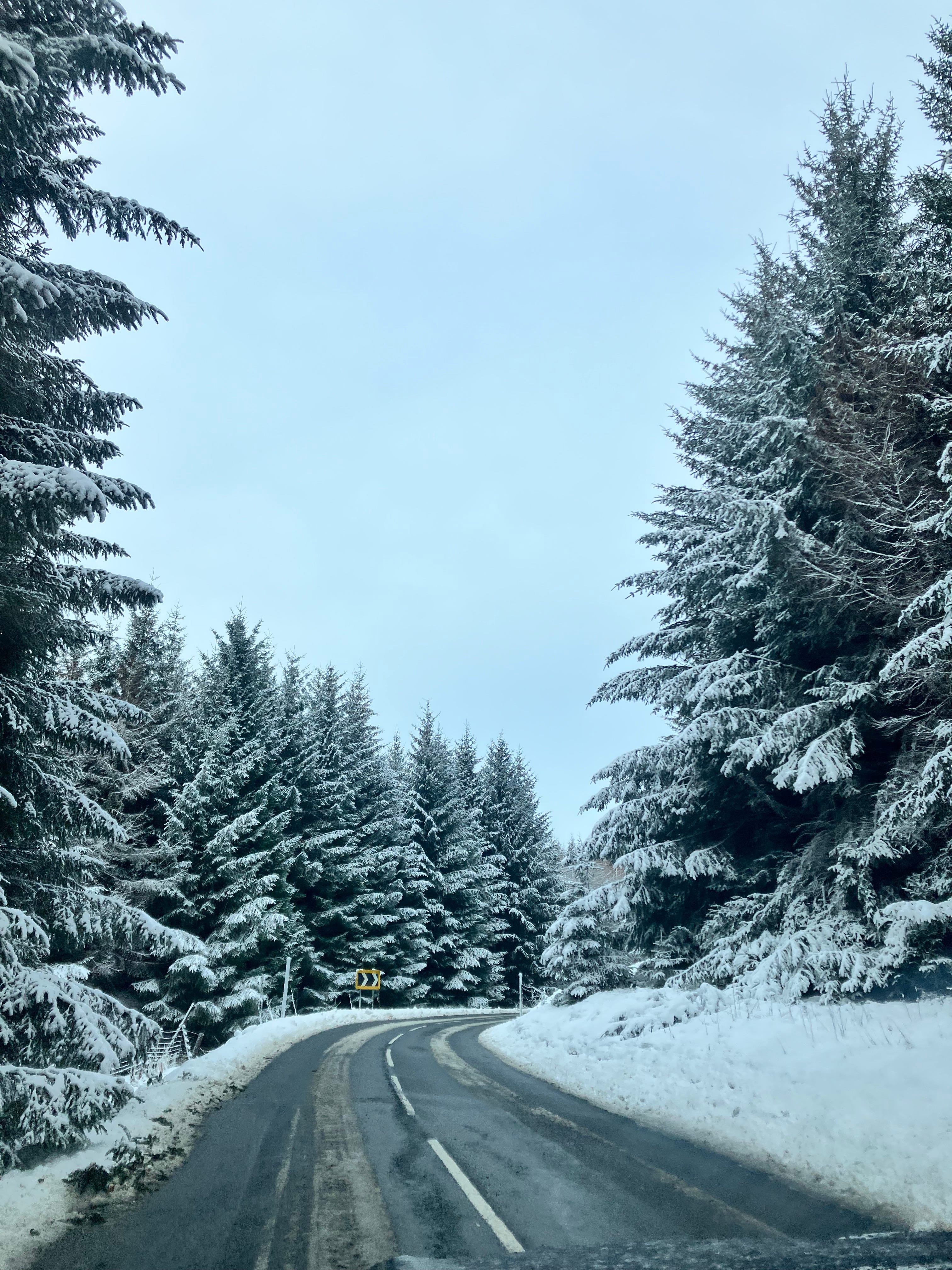
We followed the River Tay past a golf course and in to Loch Tay. It seems like it would be a lovely place in the summer, but all the Loch Ness Monster pedal boats (a nice twist on the more traditional swan boats) were pulled up on shore for the winter.
Finally we arrived in the village of Acharn, parked, and started climbing up a farm road. On one side were hills full of sheep. On the other was a gorge, with a river running through it. About two-thirds of the way up the hill, we saw a sign for “the hermit’s cave.” A low, narrow tunnel of stone winded around, the only light coming from infrequently placed openings tunneled into the ceiling. Little shelves and benches were carved into the walls.
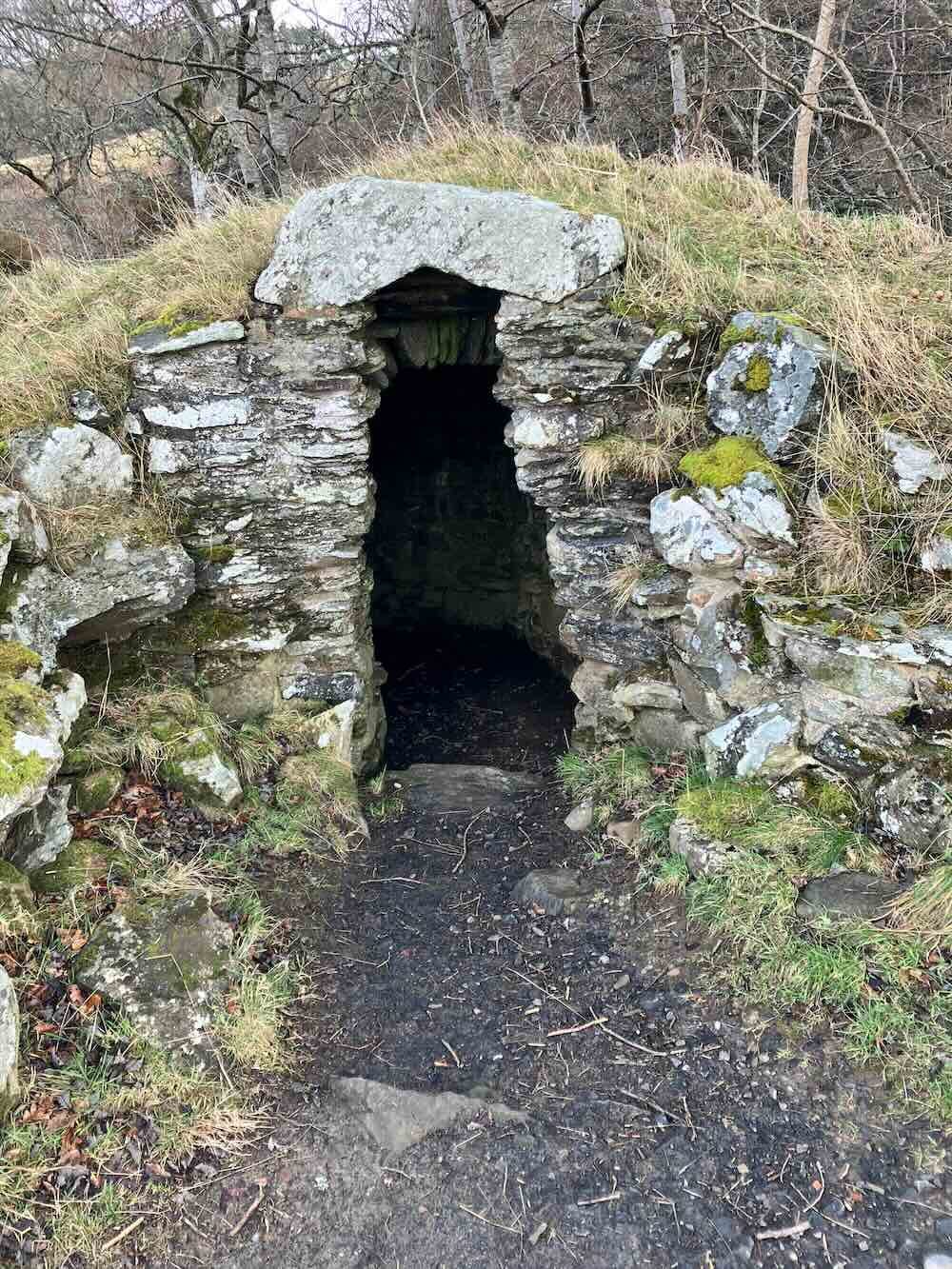
After a few twists and turns, I saw an exit to the left. It was a viewing platform, overlooking the Falls of Acharn. Both Robert Burns and William Wordsworth visited the hermit’s cave and I can see why it inspired the poets. Wandering through a dark tunnel to burst into the sunlight with a perfect view of a thundering waterfall was dramatic. The Earl of Breadalbane, who is believed to have commissioned the hermitage in the mid 1700s, was probably going for just that astonishing effect.
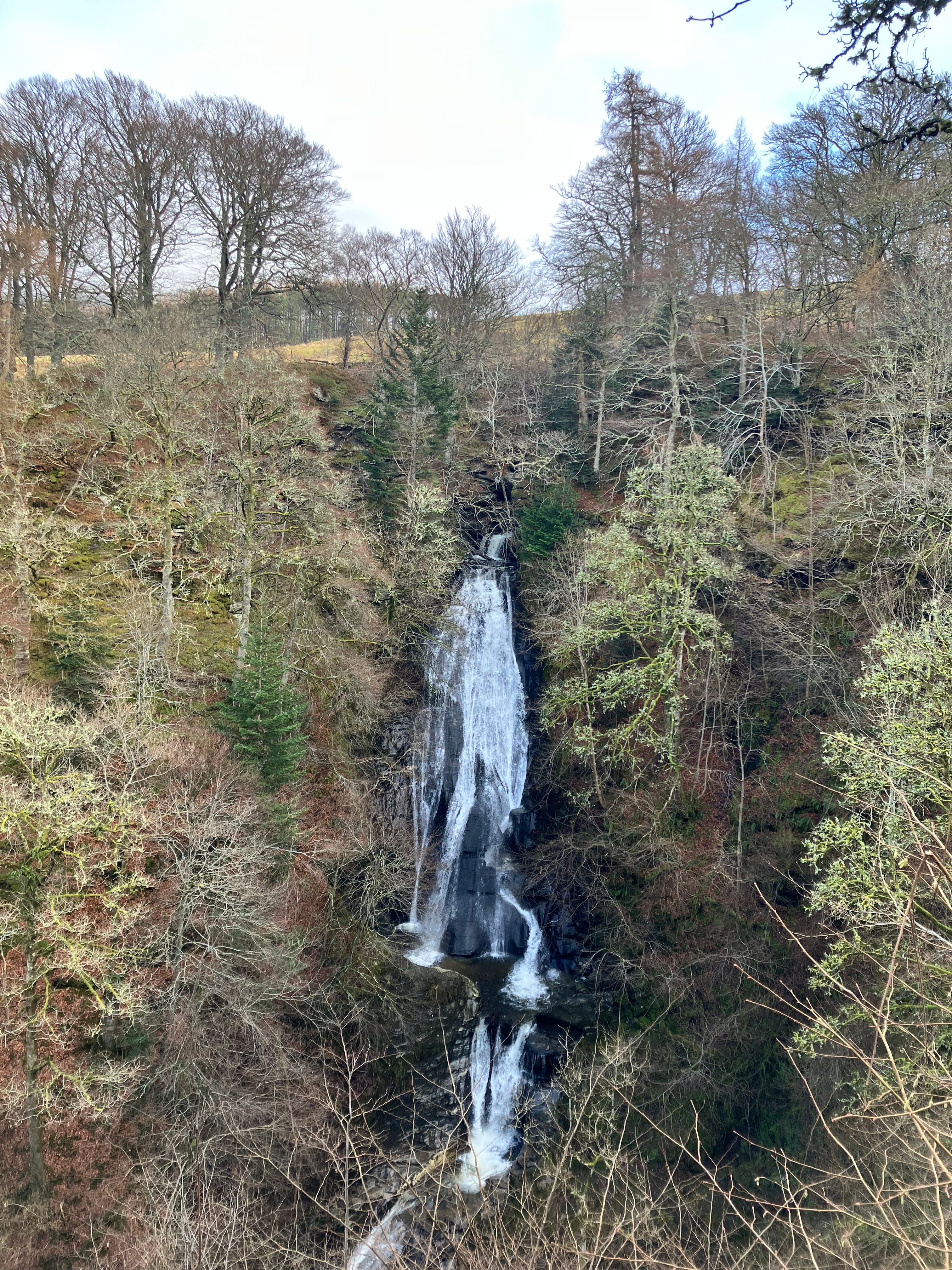
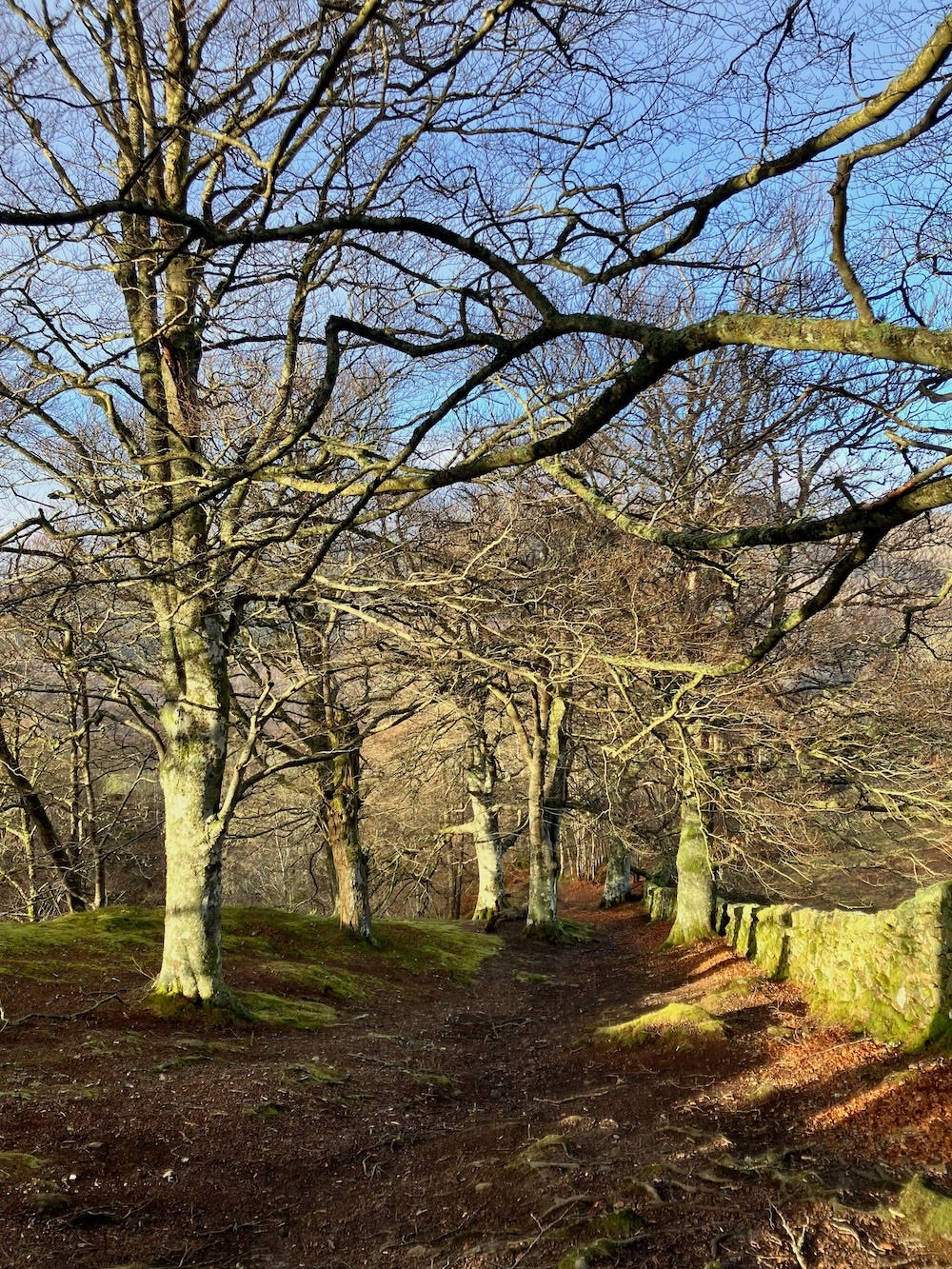
After taking in the view, we went back into the cave and popped out a bit higher on the hill. The farm track petered out; we crossed a wooden bridge over the river, went through a kissing gate, and started down along the gorge, on a walking path covered in soft, damp leaves.
I always learn something new from your posts Ona. Glad you and Andy are still exploring the world and describing your journey for the rest of us. Enjoy and take care. 😊