
I Feel the Earth Move Under My Feet

As someone who grew up in the Midwest, I know what to do in case of a tornado, but we didn’t have earthquake drills in my Minneapolis elementary school. Even after almost fifteen years of living in California, the subject of earthquakes makes me feel uneasy. I’ve watched nearly every movie ever set in San Francisco except San Andreas — I was too scared to watch a movie about an earthquake catastrophically destroying my city.
But some fears must be faced, so when I saw that the Midpeninsula Regional Open Space was sponsoring a guided earthquake walk along the San Andreas fault, I told Andy we had to go.
We drove South for an hour, parking in a dusty lot at the top of a winding road, and met up with volunteer docent Paul and about 15 other people. After a short safety lecture, we were off, climbing into Los Trancos Open Space Preserve. Paul started by telling us about plate tectonics and how the San Andreas fault is the boundary of the North American and Pacific plates. It’s a strike-slip fault, which in this case means the North American plate is moving Southwest and the Pacific plate is moving Northeast. This means during an earthquake, the plates slide past each other instead of crashing together.
All of this geologic talk was interrupted by the spotting of a coyote on the ridge to the side of us - everyone turned to look at it, brown against the golden grass. It soon disappeared into the oak trees, and our attention returned to the rocks.
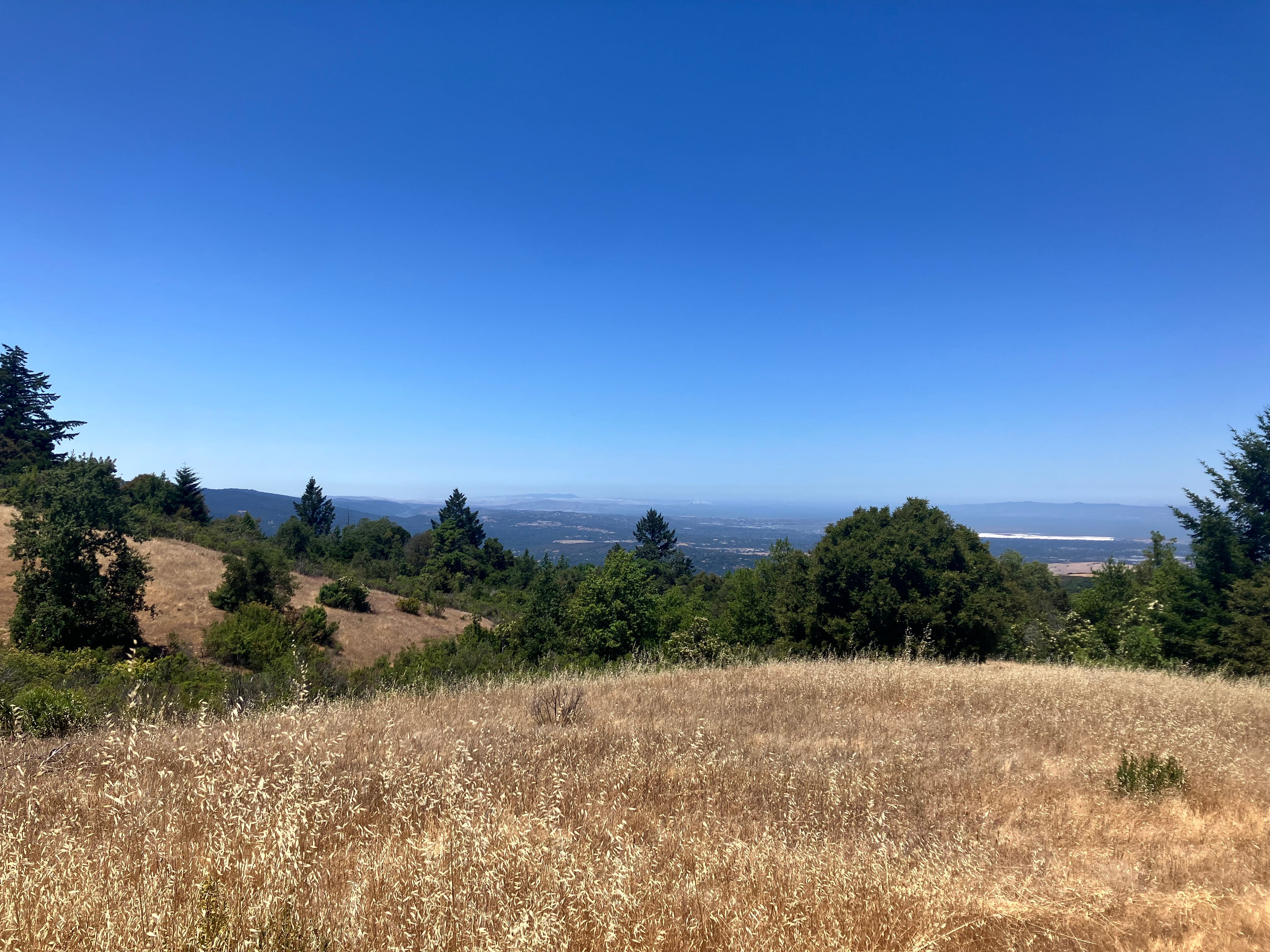
The San Andreas fault was discovered in the late 1800s by a professor from UC Berkeley. He named it after the San Andreas Valley (which also contains San Andreas Lake). Both valley and lake were created by the fault. He also figured out that the San Andreas Fault was responsible for San Francisco’s 1906 earthquake.
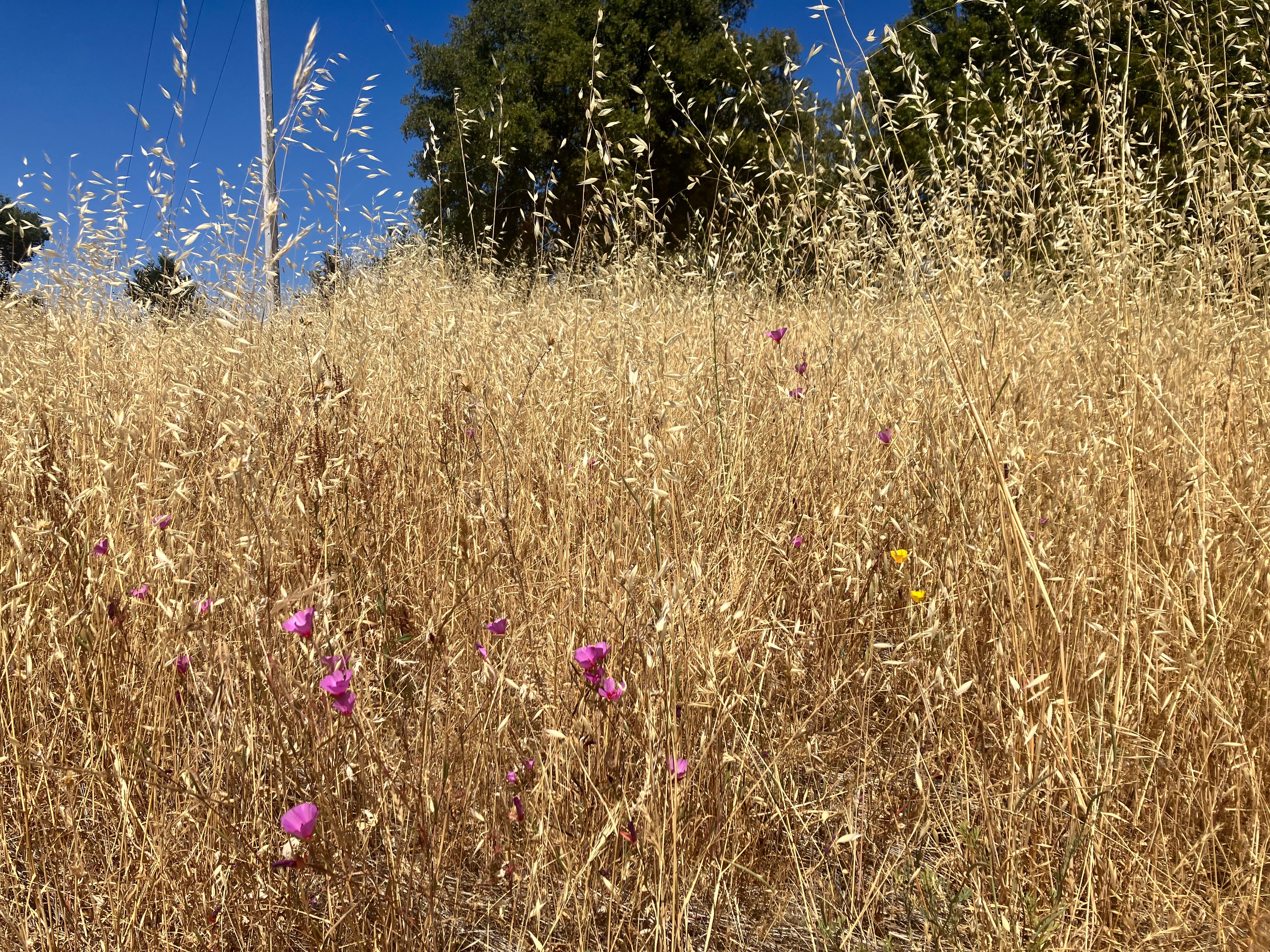
We turned off the hill and down a path into the valley. It was hot on the top of the hills — a grassland with little shade. Most of the hills had turned golden for the summer but there were a few sprinklings of a purple flower, appropriately named Farewell-to-Spring.
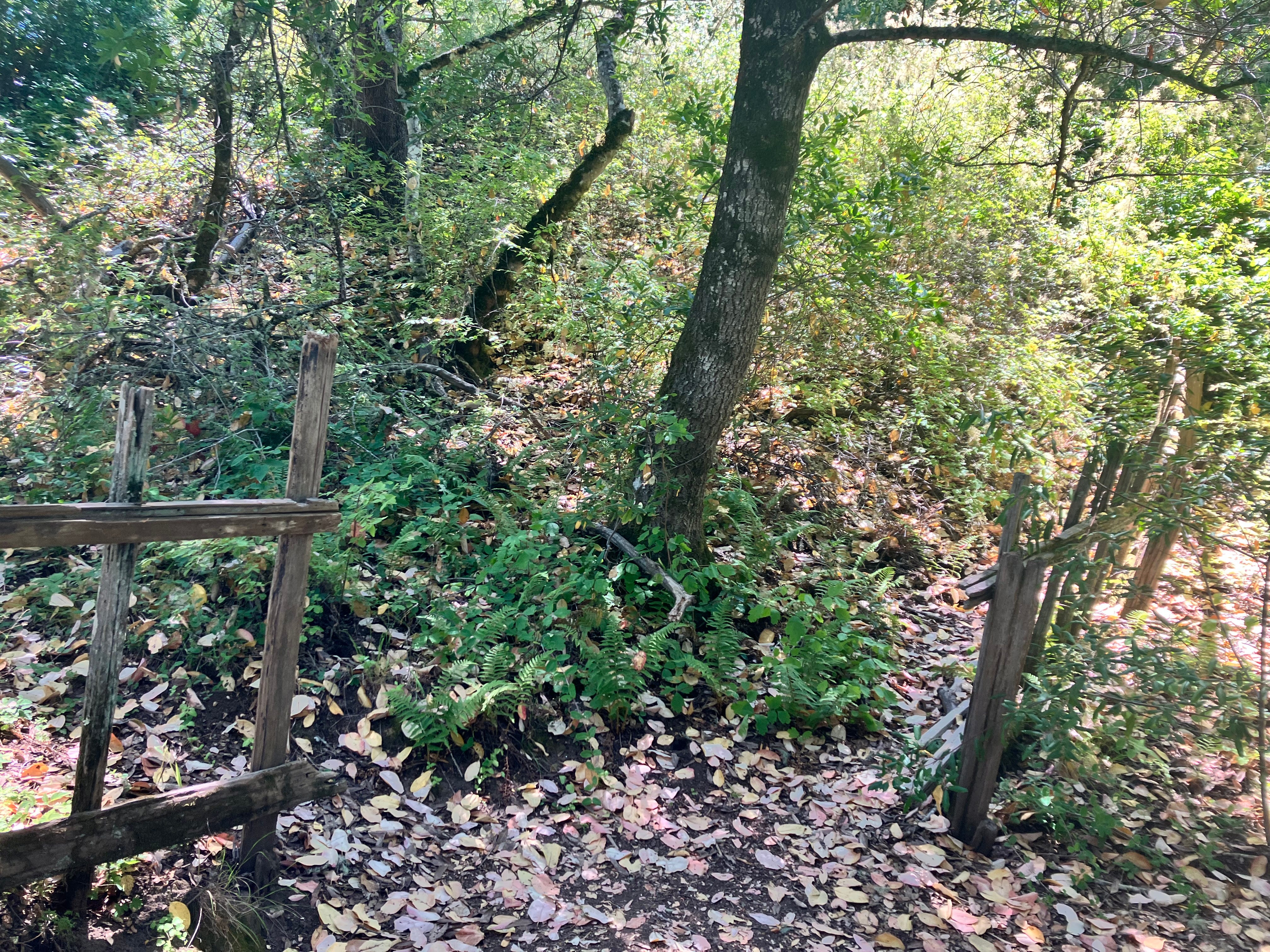
We walked down into the valley, shaded by ancient Canyon Live Oaks. Soon, we started to see stakes with yellow tops popping up amongst the foliage. They marked the location of the San Andreas Fault. It was surprisingly undramatic. I’d imagined the fault would be a gaping maw in the earth, maybe with occasional bursts of steam. I was not expecting this peaceful, bucolic scene.
Of course this area hasn’t always been so sedate. During the 1906 earthquake, the ground shifted up to 21 feet along almost 300 miles of the fault. Paul showed us a recreation of some of that movement - a fence in two pieces that demonstrated the displacement caused by the quake.
The 1906 earthquake looms large in San Francisco history. It predated the Richter scale, but it’s estimated to have been a 7.9 magnitude. The quake lasted 42 seconds and, coupled with the fires that came after it, killed 3,000 people, destroyed 80% of San Francisco, and left over 250,000 people homeless.
Much of this destruction was not from nature but from humans. While some of the fires were a result of the earthquake (ruptured gas lines, overturned stoves), many of the fires were set by the army which used dynamite to turn buildings into rubble in order to create a firebreak. But the army’s lack of experience with dynamite made the fires worse, and instead of allowing residents to help save the city, the army detained and sometimes killed anyone near the fires, saying they were looters.
Most of these people weren’t looters because, as Rebecca Solnit so eloquently outlines in her book A Paradise Built in Hell, the vast majority of people want to help each other during a disaster. In fact, bottom-up, neighbor to neighbor disaster response is often more effective and nimble, especially in the immediate aftermath of an event, than any governmental response.
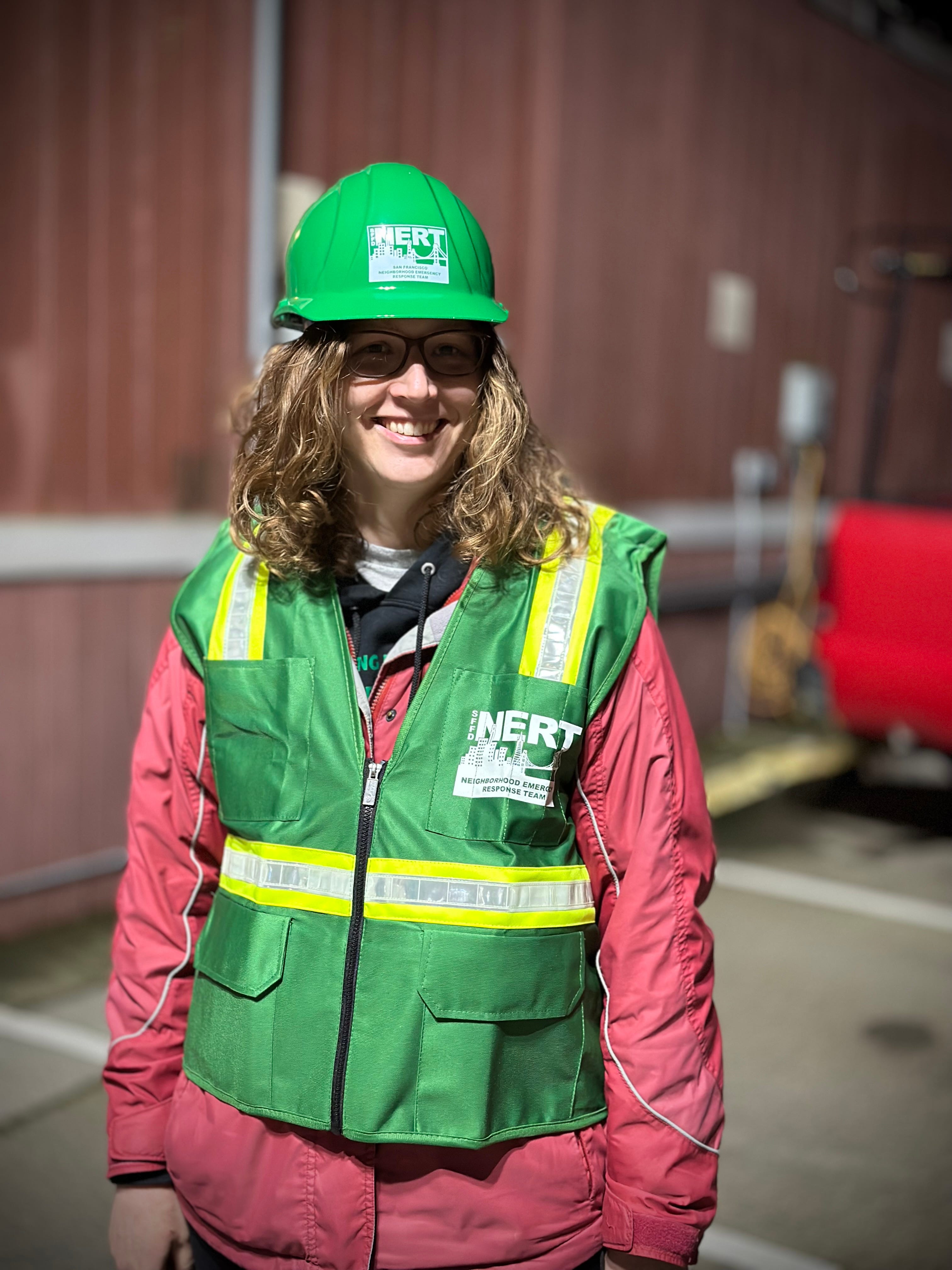
Luckily, over 80 years after the quake that destroyed and remade San Francisco, our city government finally recognized the importance of ordinary people in disaster response. After the 1989 Loma Prieta earthquake, in which residents of the Marina neighborhood helped put out fires and rescue their neighbors, the SF Fire Department created the NERT (Neighborhood Emergency Response Team) Program, which became a national model for citizen emergency preparedness.
Andy and I are NERTs; we took six weeks of classes with dozens of other San Franciscans in a portable classroom trailer in the Mission. We learned about search and rescue and triage and the SFFD’s numerous redundant systems (another lesson from 1906). As climate chaos increases the frequency and intensity of disasters and our federal government abdicates its responsibilities, our communities will depend more and more on grassroots disaster response.
Back on the trail, there wasn’t much evidence of either the 1906 or 1989 earthquakes. The most dramatic indication of seismic activity was a tall old tree that was exactly on the fault line. It almost looked like two separate trees, one hollowed out at the bottom like a little cave. Docent Paul wasn’t sure if it could survive a third major earthquake. Let’s hope we never find out…
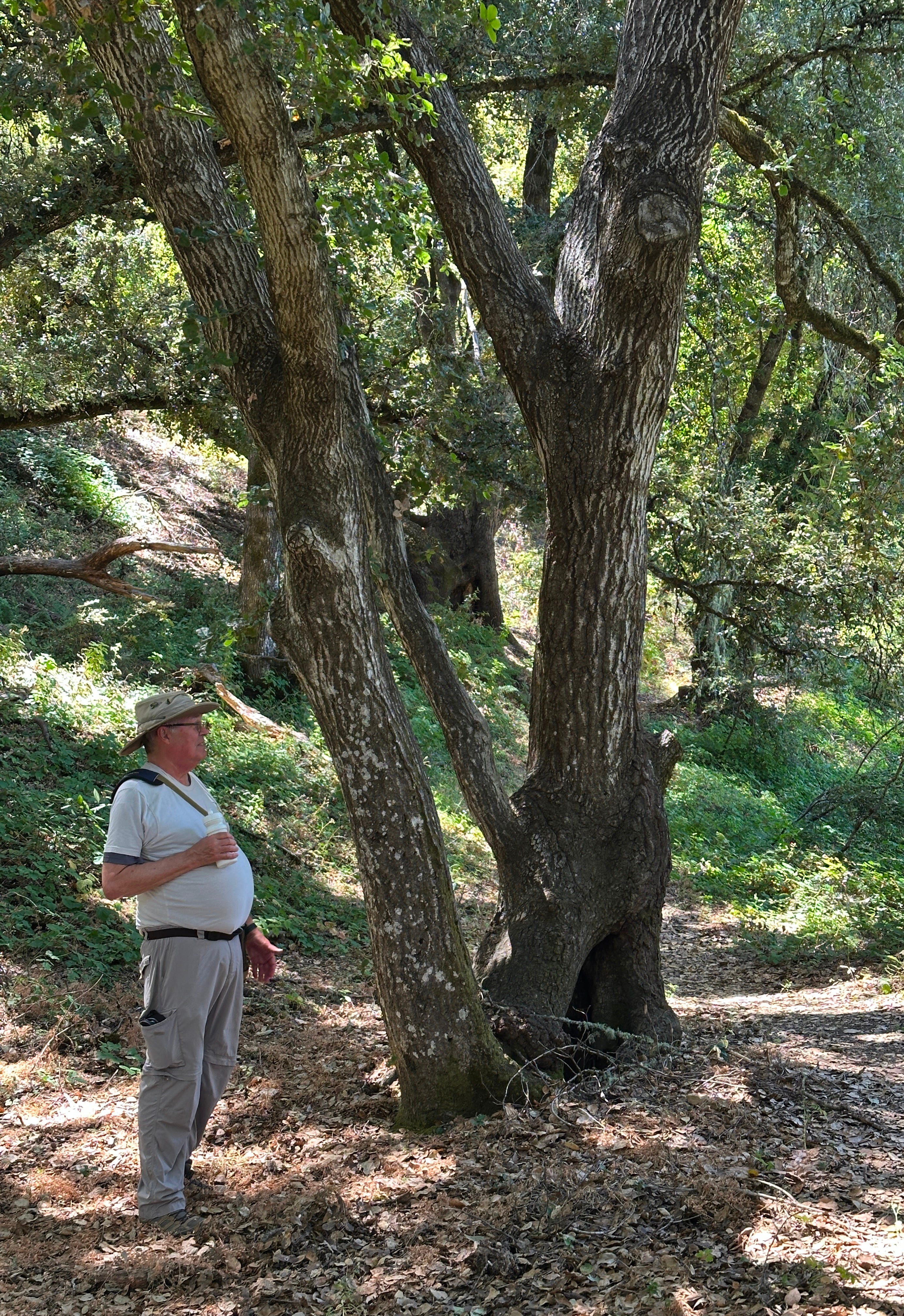
We continued following the path along the San Andreas Fault, enjoying the dappled shade on the hot summer day. The walk reminded me of the muppet forest I walked through in Scotland - oaks scattered far apart, allowing plenty of sunlight onto a forest floor filled with dense vegetation.
Eventually it was time to turn around and climb back up and out of the valley and into the sunny grassland. We drove home and, emboldened by our walk, I decided I was ready to watch San Andreas. I shouldn’t have been scared to see it. Once The Rock’s daughter said they need to get to Nob Hill because it was “the highest point in the city” (FYI Nob Hill doesn’t crack the top twenty highest hills in SF), I could really revel in the movie’s total lack of connection to reality.
Great piece, Ona!!! When we moved to California, our version of earthquake research was trying out the simulator in Golden Gate Park! It turned out to be helpful. When we experienced our first shaker, we knew what it was!