
Neukölln

I ate the best falafel of my life the other day, in a fluorescent, crowded restaurant in Berlin. We’re staying in Neukölln, a neighborhood of immigrants, many from the Middle East. It’s in West Berlin, wedged between the old Tempelhof Airport and the Wall — a once undesirable location that led to cheap rent. While the rent isn’t as cheap as it used to be, it’s still cheap enough to attract immigrants, artists, and students.


Unfortunately, the changing political winds in Germany has left this neighborhood under-resourced, and it’s a convenient scapegoat for shitty anti-immigrant politicians. It’s clear just walking around that the city isn’t providing equitable services. There’s a lot of detritus left on the street from New Years. I haven’t noticed any city workers picking it up - and I counted six during a half hour walk in a wealthier, whiter neighborhood.
That neighborhood was also in Neukölln, which was confusing to me at first. Then I learned that the neighborhood I’m staying in (Neukölln) is in one of the twelve of boroughs of Berlin called..you guessed it… Neukölln.
To learn more about Neukölln, I headed to the Neukölln Neighborhood Museum - a 20 minute subway ride from where I’m staying, just to give you a sense of the scale of this place. The museum’s main exhibition is of 99 objects that represent its history - basically from the start of human settlement in the area through to today.
Everything appeared to be in German, so at first we just sort of wandered around looking at weird trumpets and puppets and medical devices. Then the museum worker came back inside from his smoke break and very kindly showed us how to access some information in English. “These are 99 objects that represent our history” he said. “How did you decide which objects to include?” I asked. “Because these are the objects that represent Neukölln” he said. Fair enough.
One of these objects sent Andy and I down a wild rabbit hole. It was a boring black plastic box with a handle on it, which turned out to be a bomb. The bomb was planted in a department store by an extortionist known as “Scrooge McDuck” (apparently Donald Duck is extremely popular in Germany??). Scrooge McDuck spent a few years in the 1980s and 1990s building bombs and putting them in fancy department stores around West Germany in order to extort money from them. The whole thing reads like an absurdist episode of Duck Tales, including a botched money drop-off in which the police were told to put the cash in a tiny train. The train zoomed away and the officers gave chase, only to set off trip wires which in turn set off firecrackers, causing mass panic and confusion. The tiny train sped along the tracks in Berlin but the cash wasn’t secure and started flying all over the place and McDuck didn’t end up with any of it. The police looked like buffoons for years, and their inability to catch Scrooge McDuck, plus his choice of high end department stores during a time of deep economic and social turmoil during reunification, made him a folk hero. After spending $20 million pursuing him, the police finally caught Scrooge McDuck, who served time in prison and is now an artist. (I recommend this New Yorker article if you want to learn more Duck Tales).
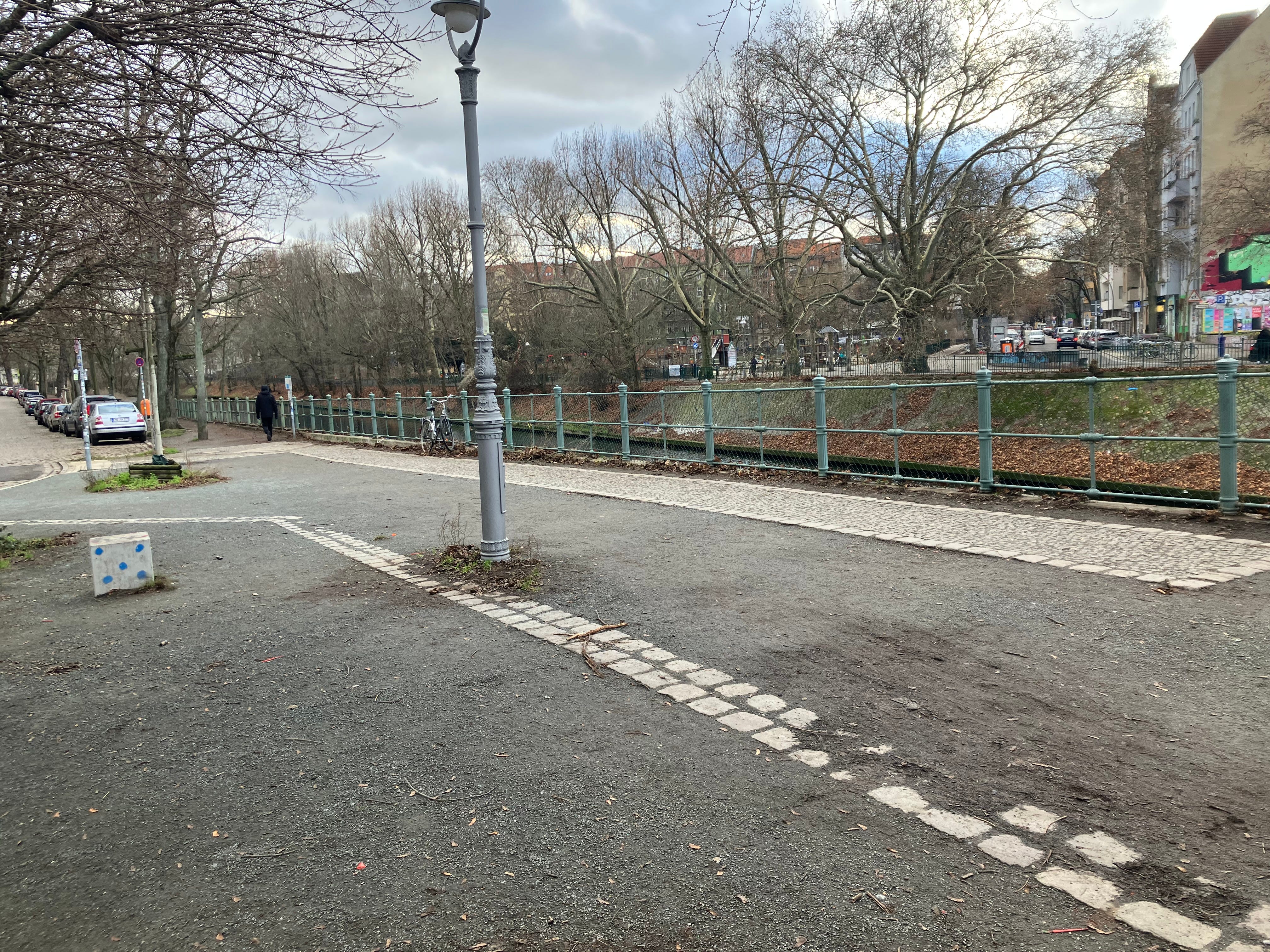
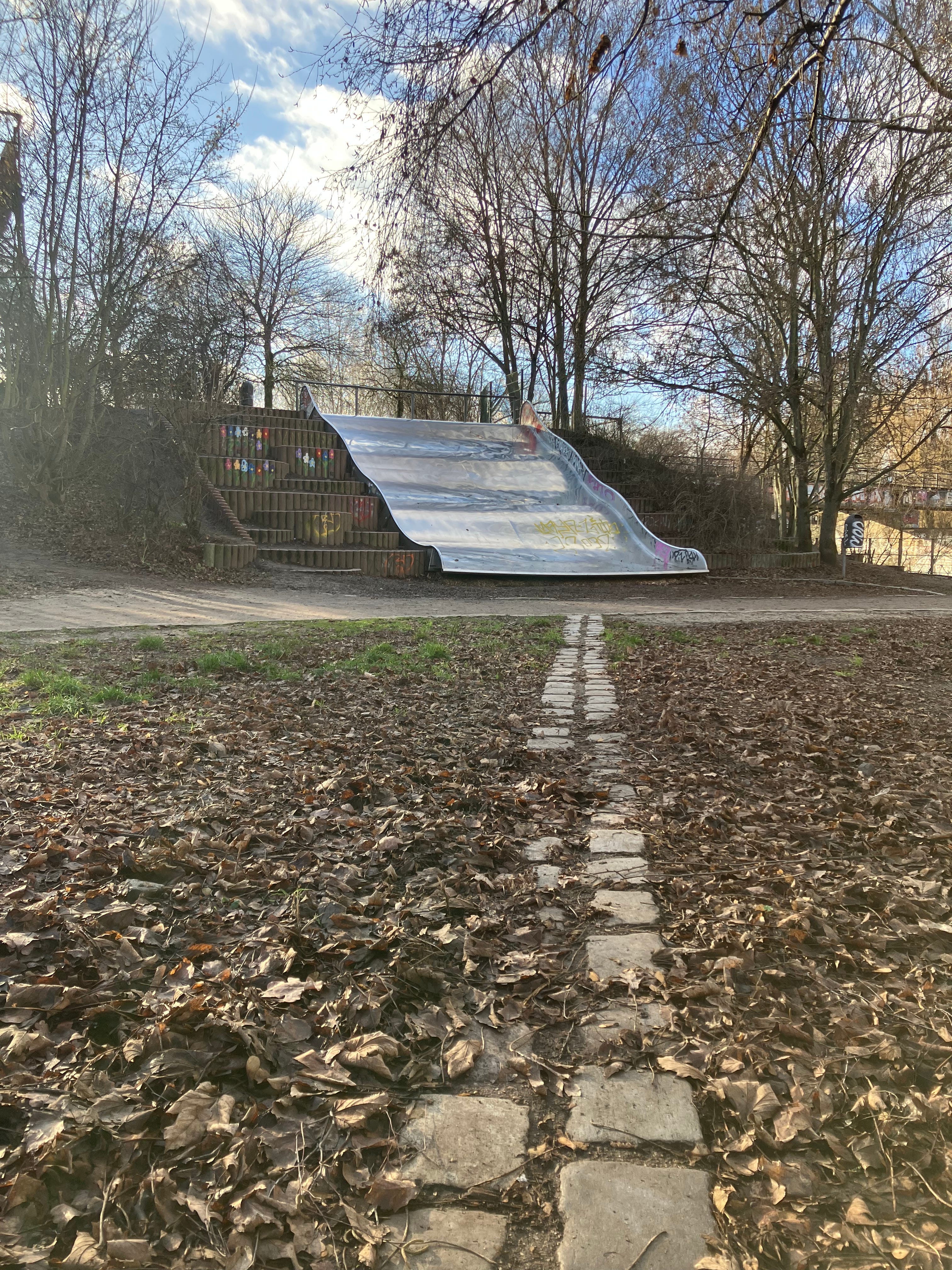
Today, I decided to go find where tthe Wall used to be on the edge of Neukölln. I crossed a canal and found it - demarcated by a double row of bricks. I walked further, towards Schlesischer Park, where I had read that an East German guard tower was still standing. I didn’t see it at first, though I did come upon the slightly surreal sight of a large slide that ended right on the Wall.
Then I finally spotted it, amongst the trees and bikers and joggers and groups of guys hanging out. This tower was bigger than those that were spaced out every 300 meters or so along the Wall. It served as a sort of command post and even included a little jail cell. This was an area of particular concern to the East Germans — in the early 1960s, a group of East Germans hijacked a steamboat (!) on the Flutgraben Canal and steered it through a hail of bullets and into the Spree River and West Berlin.
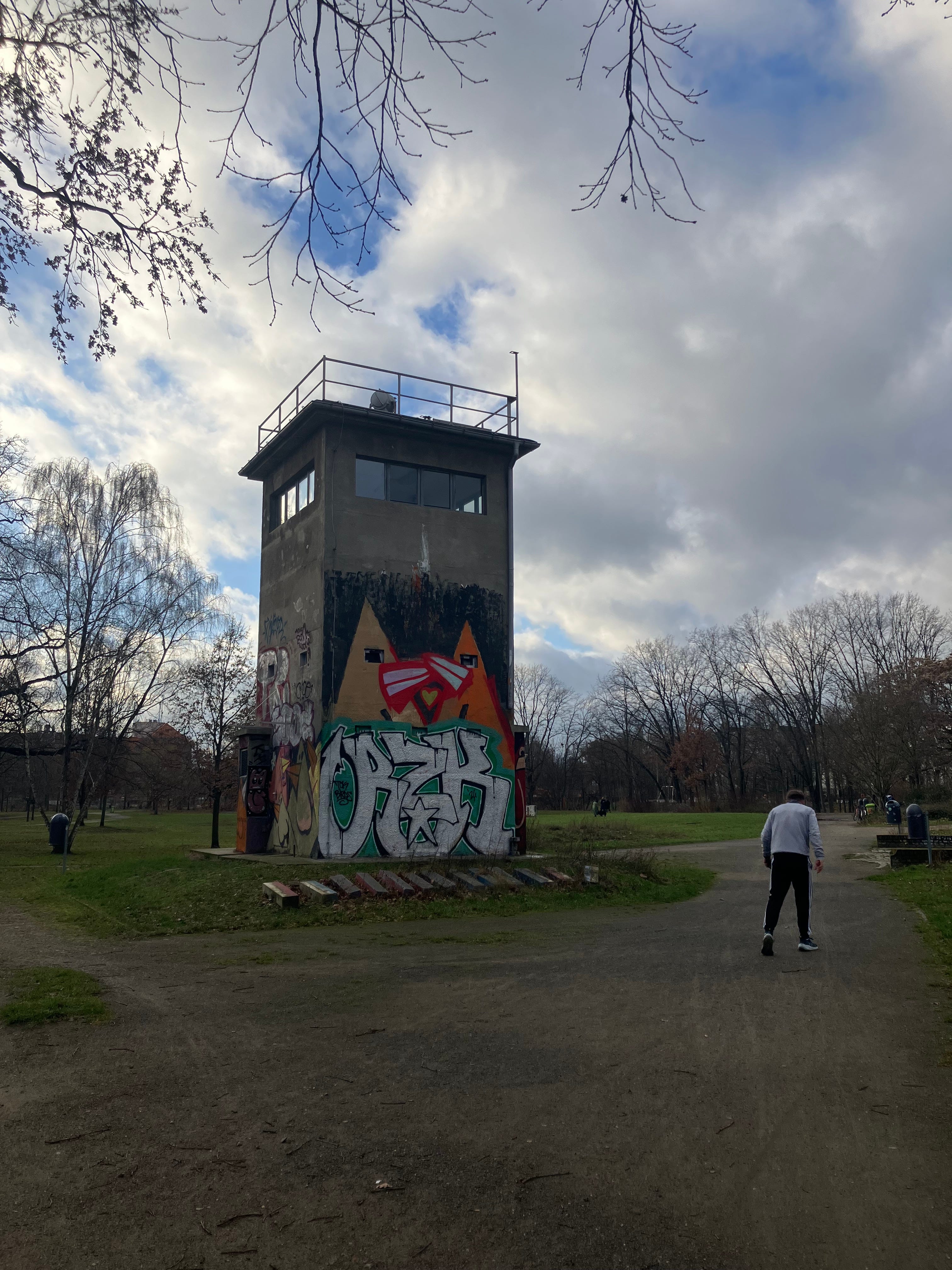
Besides the graffitied guard tower and the double bricks, it’s basically impossible to tell that this was once a city divided. Particularly in non-touristy areas, it can be hard to tell where the wall even was (moreover, which Wall - there were actually several layers of security and fencing and walls between East and West. Which one counts as THE Wall?).
It makes sense in a way. How can you reunify a city if you don’t tear down the physical (and symbolic) walls? But leaving that border unmarked seems somehow disrespectful to the victims of and rebels against the GDR. The double bricks feel underwhelming. It’s a problem the city has been grappling with for decades.
The Wall and all it represents is, of course, not the only horror that a German state inflicted on its people in this city, but it is the one that happened during my lifetime. And because it’s such recent history, I never learned about it in school. I have a feeling I’ll be returning often to this Wall - or non-Wall - over the next few weeks. Stay tuned.