
No man has the right to own mountains

I’ve been in England and Wales for five weeks now. I’ve read books about walking here, visited archives and libraries, interviewed walkers, academics, and activists, and hiked dozens of miles. But I don’t think I fully understood how important and popular walking is to the UK until I came to the Lake District.
On the 3 mile drive from the grocery store to the cottage we’re staying in, I counted 25 walkers (and no less than seven dogs). On a Monday. In the middle of the day. In December. In an intermittent drizzle.
But these numbers would have paled in comparison to the thousands of ramblers that flooded the countryside each weekend in the first part of the 1900s. It was the ideal activity. Train fare was cheap or you could bike safely. The clean air was a respite from the polluted factory towns. And walking and camping are free and fun - perfect for the young people who had all left school at 12 (later 14) to work. These walks in the country were freedom.
Sort of.
The land around Manchester that had once been for the commons and open to all just a generation or two before was fenced off and privatized. The public was restricted to a few miles of paths - excluded from hundreds of square miles that had once been theirs.
These paths were crowded. It seemed a great injustice to leave the cramped cities for the country, only to be cramped onto a little trail. The land beyond the public paths was mostly used for grouse shooting (more on that later) and patrolled by game wardens. After a rather unpleasant interaction with a game warden in which he was forced to turn back, a 20 year old from Manchester, Benny Rothman, thought that if he’d been with a larger group, they wouldn’t have been forced to turn back. Sick of being confined to a few paths while miles of moorland were reserved just for the rich, Benny and others organized a mass trespass on Kinder Hill on April 24, 1932. Hundreds of young women and men stepped off the trails and into the wild.
Kinder is an enormous and slightly foreboding piece of land. Numerous people mentioned to me how dangerous it could be, especially in the winter. So I was very grateful when Dave Toft, Chair of the Hayfield Kinder Trespass Group, graciously offered to give me a tour.
Dave (and his adorable dog Meg) met Andy and me at the New Mills train station. We drove up to Hayfield, the town closest to Kinder Hill (train service there was cut in the 1970s) and started up the Snake Path. The Snake Path was one of the first rights of way battles in the area — if that path hadn’t been secured by activists a generation before, the actual trespassing part of the mass trespass would’ve started much lower on the hill!
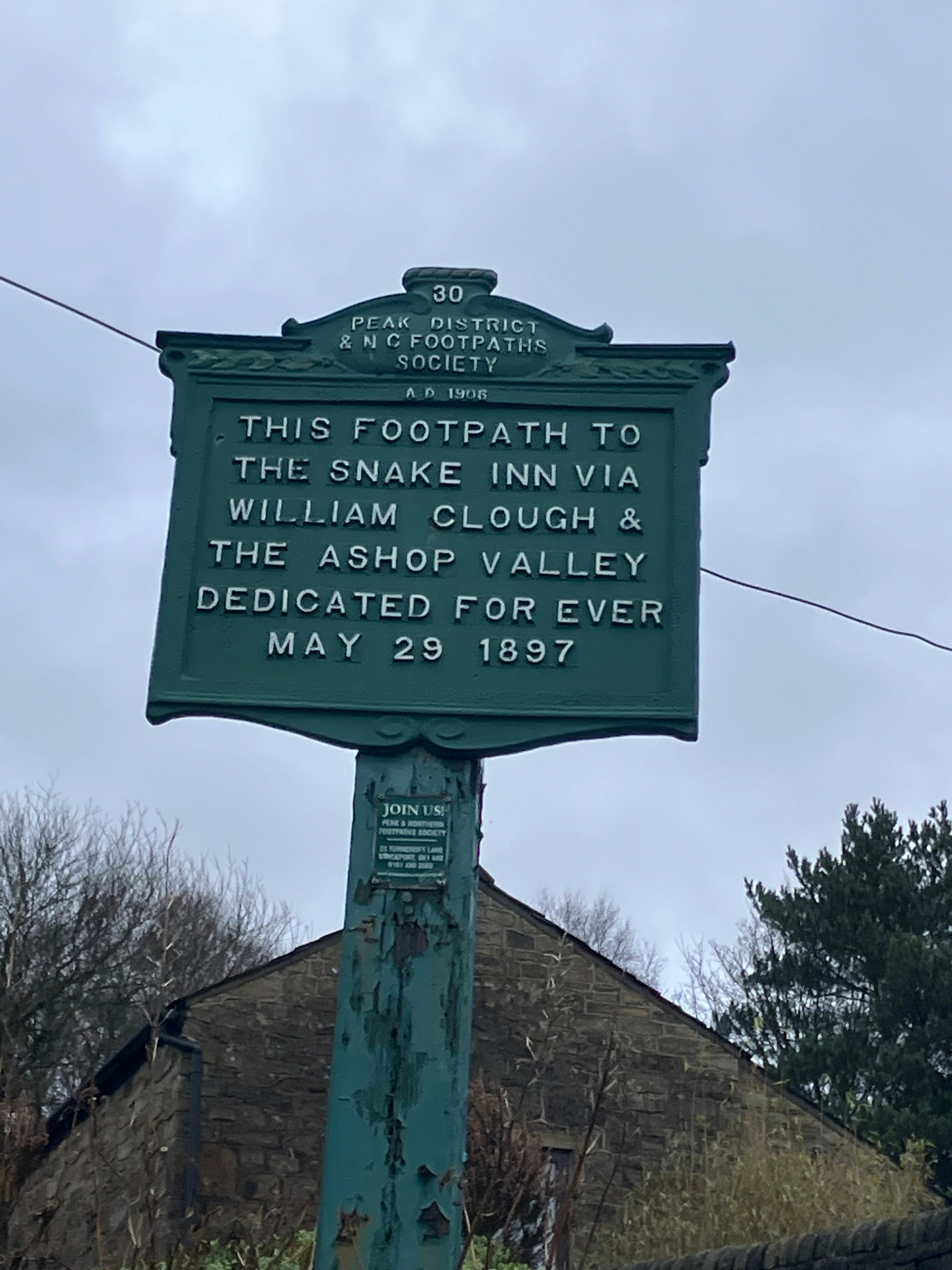
The initial climb was on a road that had been in use for hundreds and hundreds of years. Its was full of giant stones - tough walking. Recent heavy rains had sent rivulets of water flowing and there was mud everywhere, especially near the gates.
We finally finished the first ascent, passed through the last kissing gate, and entered the moor. “Moor” is the ultimate British word - I immediately think of Heathcliff and brooding people in cloaks. But I never understood what a moor actually was — only the vibes. When I asked Dave the definition of a moor, he looked a bit surprised. I guess it’d be like asking an American what a prairie is. It seems a bit obvious when you’ve been around it your whole life.
Anyway, THIS is a moor:


Ahead on the left was the old hunting lodge of the Duke of Westminster. All of this moorland had been privatized so that people like the Duke of Westminster and the Duke of Devonshire could hunt grouse. Really it was more of a slaughter. My uncles hunt birds, and I’ve never seen them come back from a day of hunting with 2,000 carcasses. And I have a lot of uncles. But they’re no match for the rich assholes who would sit in a blind while beaters came through the moor and disturbed the birds so that they could be shot more easily.
Incredibly, the argument against open rambling on the moors was that it would disturb the birds. In the Rambler’s Federation Handbook of 1935, one person pointed out that “ramblers are often taunted with being noisy and with singing the country, but nothing has ever been said about the din that is made in a shoot.” I can see why it was hard to take the landowners seriously. The people so concerned about delicate grouse breeding patterns that they couldn’t possibly allow the public to lay a single step on the moor were the same ones blasting those birds out of the sky.
Ahead of us, Kinder was shrouded in mist — it looked majestic and spooky. To me, it seemed a foreboding and surprising place for a fight for access. But I also understood the magic of it — and why it was worth fighting for.
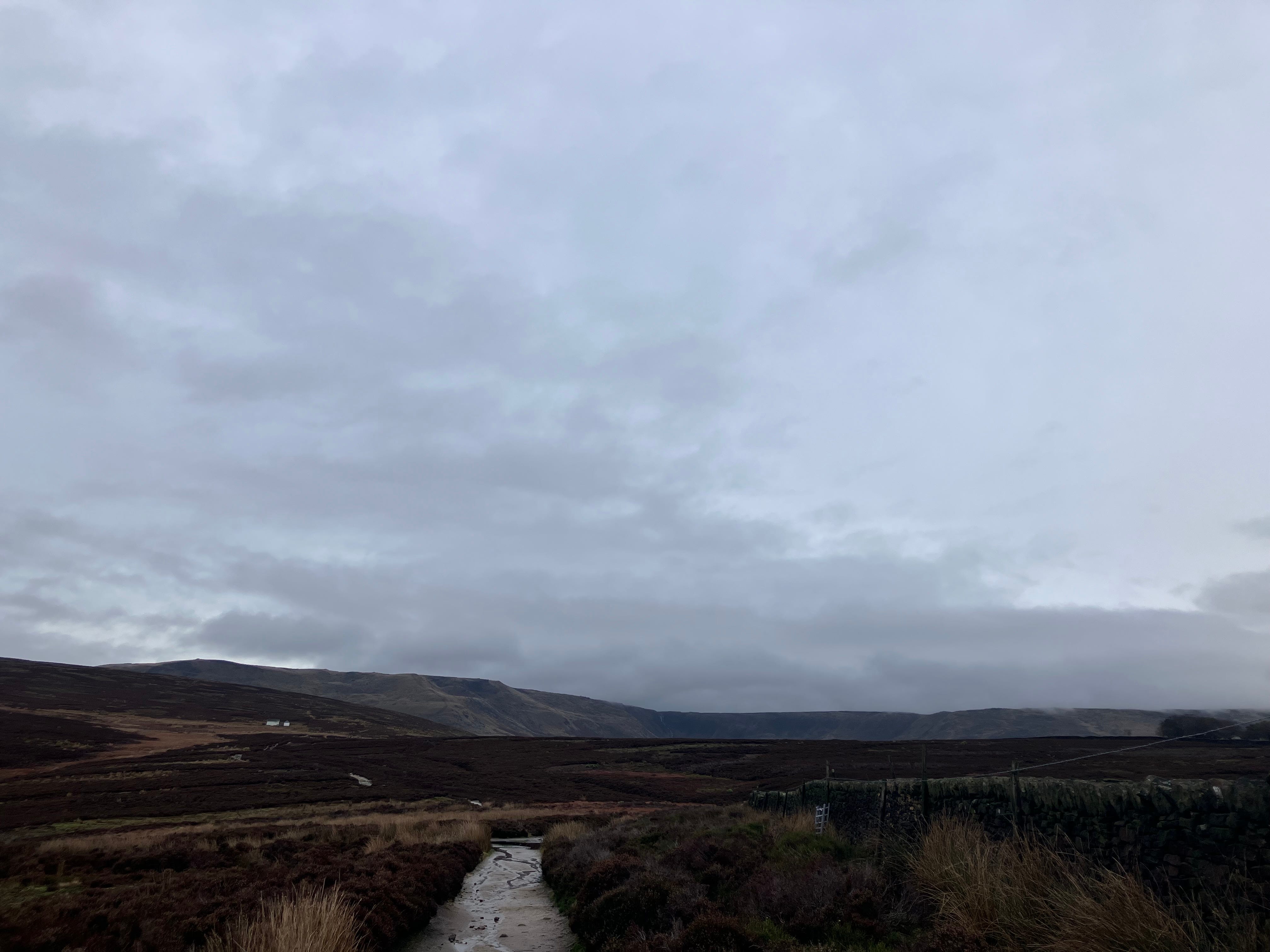
The weather was dismal and we didn’t have the time to actually climb the hill, so Dave brought us down the valley a bit and pointed out where some of the events of the trespass happened. The hundreds of trespassers marched in a line on the public right of way basically until they got to the hill and then spread out to climb it. There were game wardens stationed to stop them, but just as Benny had predicted, there were too many trespassers and the game wardens couldn’t turn people back.
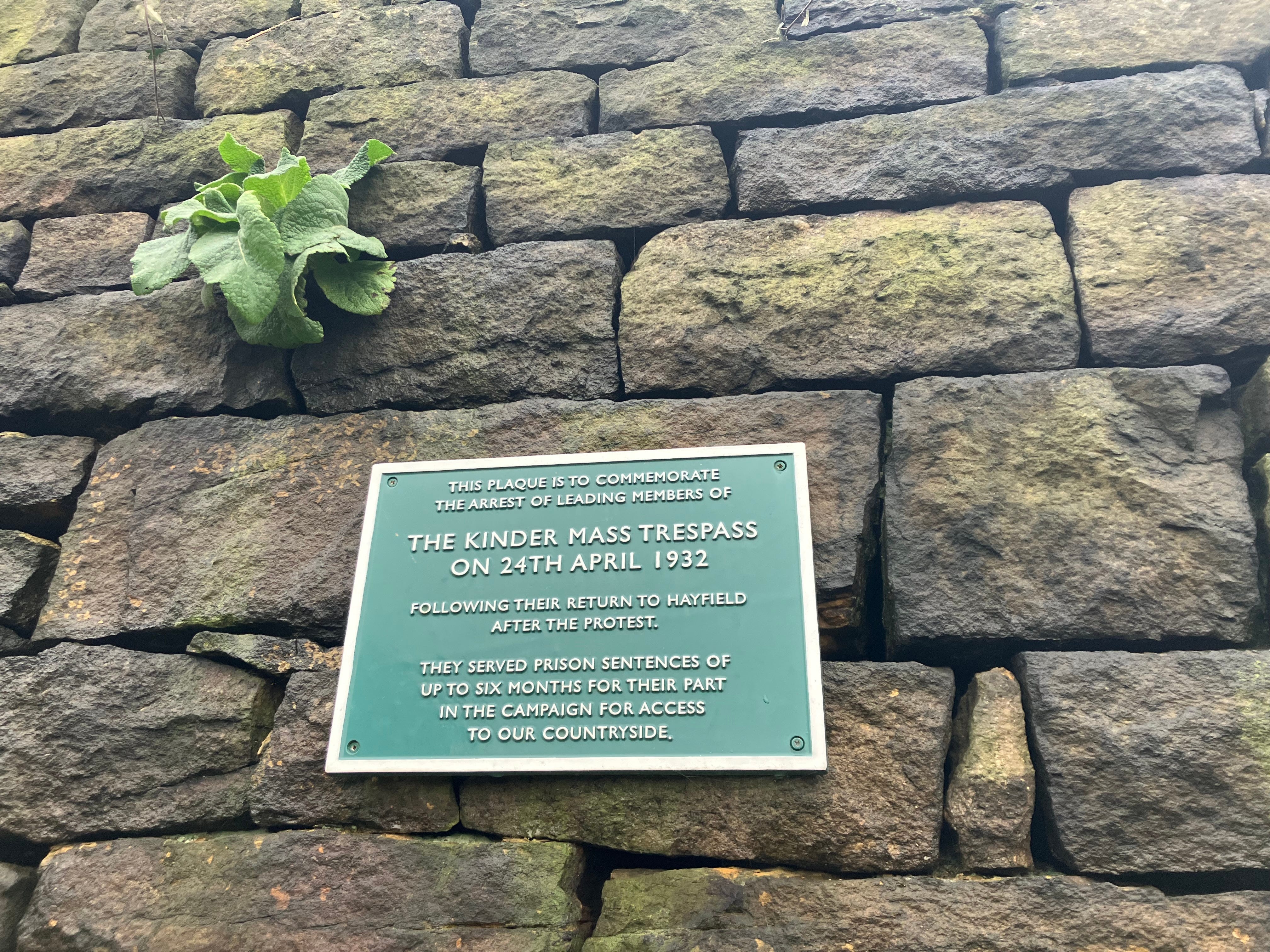
Instead, the police arrested 6 trespassers at the end of the day. Right near the Snake Path sign, ironically enough. After a farcical trial, five of the trespassers were handed down sentences of two to six months.
Most of the official Ramblers groups in the area (largely middle class professionals who didn’t necessarily like the countryside being flooded with working class teenagers) were against the trespass. They’d been negotiating with landowners and crafting legislation for fifty years and viewed the trespass as a giant step backwards — an unstrategic and provocative act. But the trespassers didn’t want to wait another fifty years to have access to the moors — it was time for action. Benny had learned from the example of his British Workers’ Sports Federation comrades in London, who had used direct action to win better recreational facilities for working class folks; he used those wins to inspire the trespassers at Kinder.
The trespass might not have had such an impact if not for the state’s overreaction to it. Trespassing was a civil matter, but the Kinder trespassers faced trumped-up charges that turned the case into a criminal one. While they disagreed with the trespassers’ tactics, the various Ramblers organizations were horrified at the severe sentences handed down to them. The publicity around the arrests and the trial put a spotlight on just how fragile and minimal public access to the land was. It galvanized people and led to more trespasses and activism, which eventually led to the passage of the National Parks and Access to the Countryside Act in 1949. Not coincidentally, the first national park in England was in the Peak District (the region that Kinder is in).
But there’s still much more to be done. As Dave told me, only about 7% of the land in England is accessible to the public. 30% is still in the hands of the aristocracy (interestingly, roughly the same as the percentage of land owned by the Federal government in the US).
Unsurprisingly, the benefits of owning the land continue to be privatized while the costs are socialized. Grouse shooting is a perfect example. In order to feed the grouse, landowners burn the moors to stimulate heather growth (which is what the grouse eat). Burning the moors harms the peat beneath it, turning a landscape that should be a carbon sink into a huge source of carbon emissions. The rich get their grouse hunting and we all deal with the climate catastrophe. Oh and also the grouse moor owners get £10million in public farm subsidies every year (as of 2018). The public is forced to subsidize its own destruction.
It doesn’t have to be that way. Just as the Mass Trespassers chose to ignore the ruling class that told them “that’s just the way things are,” to imagine a different way and put it into action, so can we. The most potent weapon of the powerful is to make you believe that you don’t have any power. But if there are enough of us, we can’t be turned back.
————
A very special thanks to:
Dave Toft for picking up two American strangers and taking us on a walk in the rain
Julian Batsleer for his sharing of resources
Morag Rose for introducing me to Julian and Dave and for being a wonderful and generous resource for walking Manchester
The archivists and librarians at the Working Class Movement Library and the People’s History Museum.
I highly recommend reading The Book of Trespass by Nick Hayes, an engaging, beautiful, and infuriating book and listening to the Manchester Rambler by Ewan MacColl (the subject line of this email is from this song).
That was a great story
So interesting