
OnAStrike OnABike
Riding through the San Francisco educator strike

There’s a point on Polk street, after biking up and down some gentle hills, passing nail salons and donut shops and fancy coffee places and vape stores, where you crest a final hill and look down into the Bay. The street is narrow, the view framed by tall buildings, giving you a little slice of water and sky and the hills across the way. It’s almost startling how quickly it comes into view, one of those San Francisco vistas that are so sudden and so beautiful that they jolt the heart.
I saw this view many times over the past two weeks at nearly every time of day, from before sunrise to after sunset. I saw it in sunshine and rain and mist and fog as I biked from my house to the office of the United Educators of San Francisco, the union for teachers and paraprofessionals and social workers and many of the other folks that make our schools run.
UESF was on strike last week for four days, fighting for stability in a city that feels hard to be stable in. Fully-funded family health care, decent wage increases, more resources for special education students. A contract that would actually allow people to be in San Francisco Unified School District for their entire career. A contract that would make it possible for educators to live in the same city they work in.
The night before the strike began, I ruptured a tendon in a finger on my left hand and the ER doctor told me I couldn’t bike. By the morning of day 2 of the strike, I drove back home and switched my car for my bike. It was impossible to get around the city in the way I needed to by driving. I couldn’t spend the strike stuck in traffic.
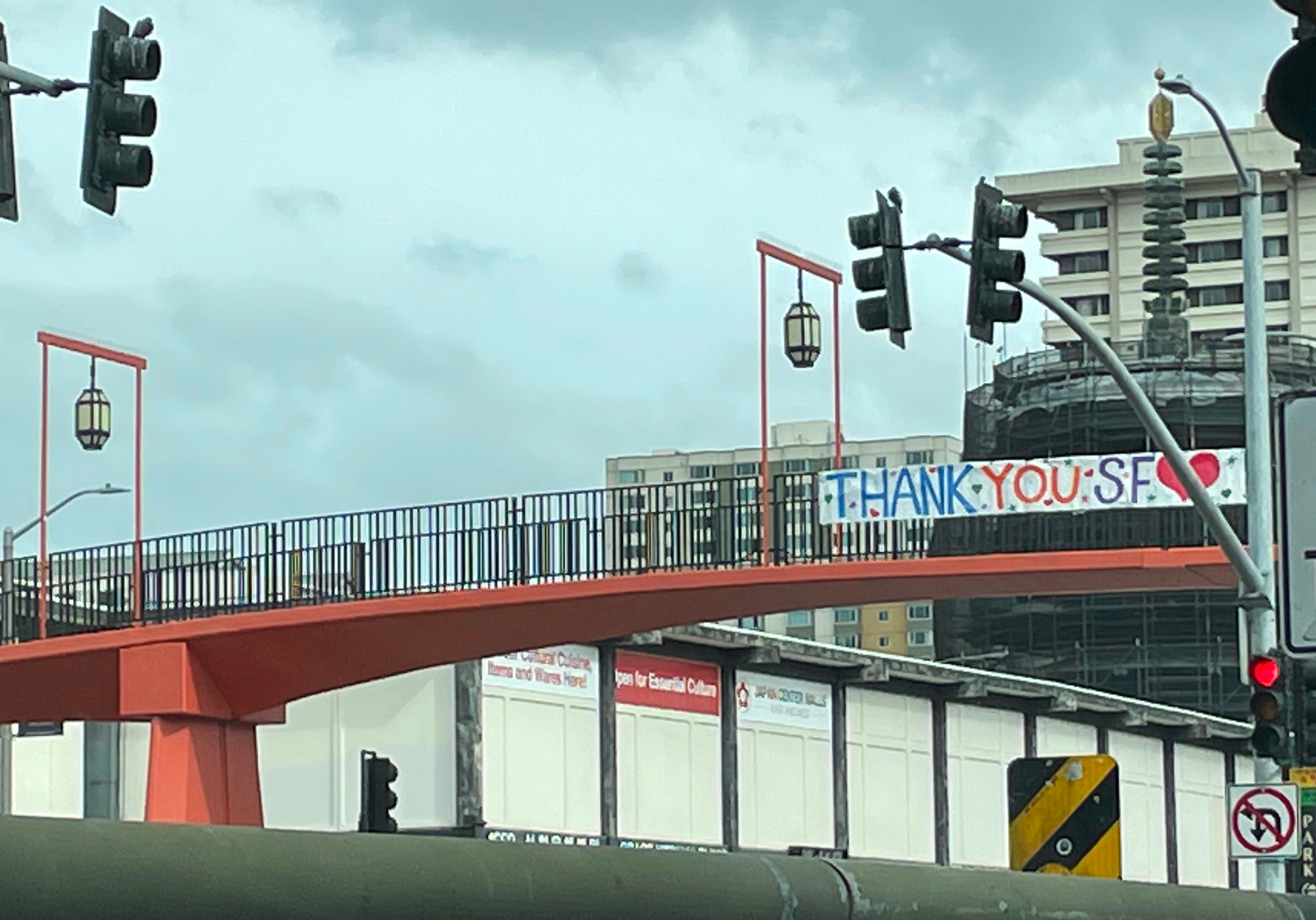
As I coasted down the hill from my apartment, I almost immediately encountered the strike. The elementary school around the corner had taken over the iconic bridge that crosses Geary Boulevard at Japantown. The traffic islands and corners of the intersection were filled too, with parents, educators, and students chanting and waving signs, the air raucous with honking.
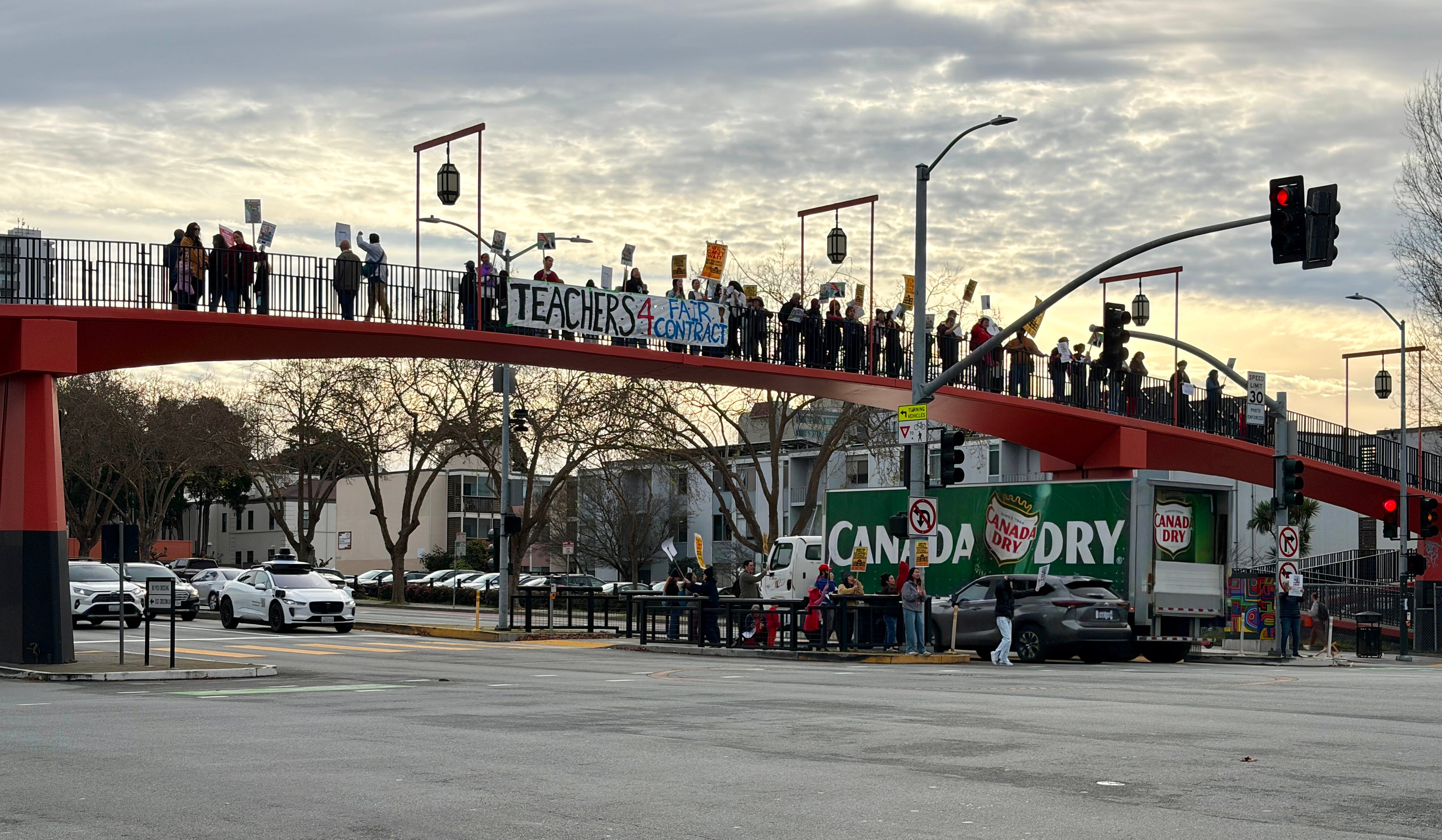
I took a left and headed up Webster, where John Muir Elementary sits perched at the top of the hill. Folks there had a picket line that went on a loop around the corner of their school and then across all of the streets, chanting as they waited for each walk signal. Their goal seemed to be to obtain maximum honking — it made it hard to have a conversation with the picket captain, but neither of us cared. After our check-in, I jumped back on my bike, making my way through the morning rush hour traffic and back to the office.
It was a noisy few days in the city. An organizer friend of mine jokingly called her car her “mobile solidarity machine” and told me she felt like honking at picket lines was the most significant thing she’d done to help a strike as an organizer. It’s the one thing I missed about my car during this strike — my bike bell didn’t quite have the same “oomph” as a car horn.
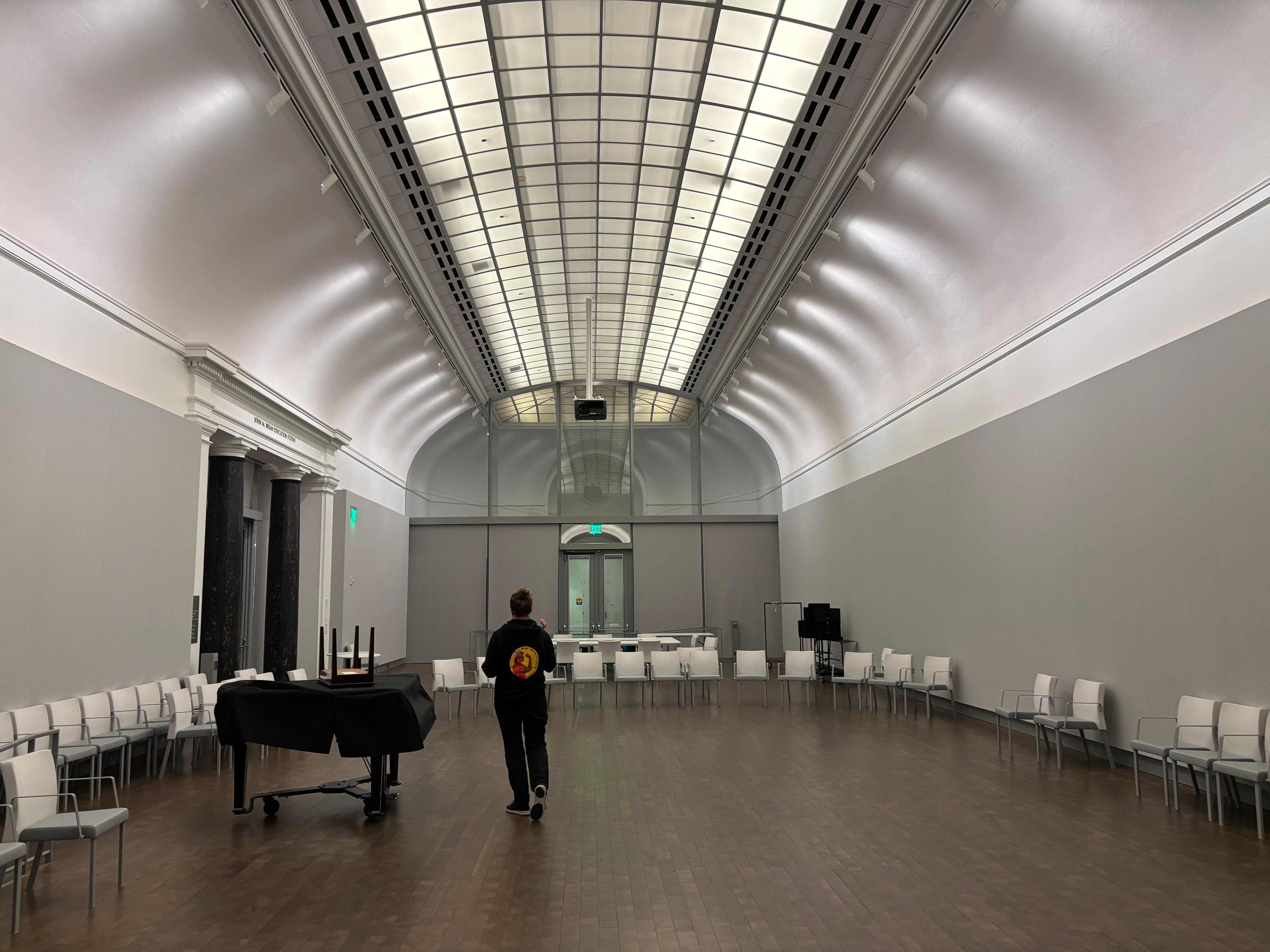
After finishing up at the office, I hopped back on my bike. It had started to rain by this point. I decided to skip the hills and ride through the drizzle along the flat Embarcadero, past the piers and the choppy Bay, turning onto Market street, dodging busses and street cars and jaywalkers until I got to Civic Center. My destination was the city-owned War Memorial Opera House, a magnificent stone building home to the San Francisco Opera and the San Francisco Ballet, built as a monument to San Franciscans who died in World War I. It was a surreal place to have bargaining during the strike; it felt strange to wheel my grubby bike through its marble halls.
As I biked through UN Plaza and up McAllister towards the War Memorial, I heard a wall of sound. A teacher stood on the back of a flatbed truck, microphone in hand, leading thousands of educators and students and community supporters in chants. “One day longer! One day stronger!” they yelled, waving banners and picket signs and banging drums, soaked from head to toe.
The bargaining team had left the War Memorial to watch everyone walk by and almost all of them had tears running down their faces. “Teachers who taught me when I was a student and my own current students were marching side by side,” one of them told me later. “I cried.” How could you not?
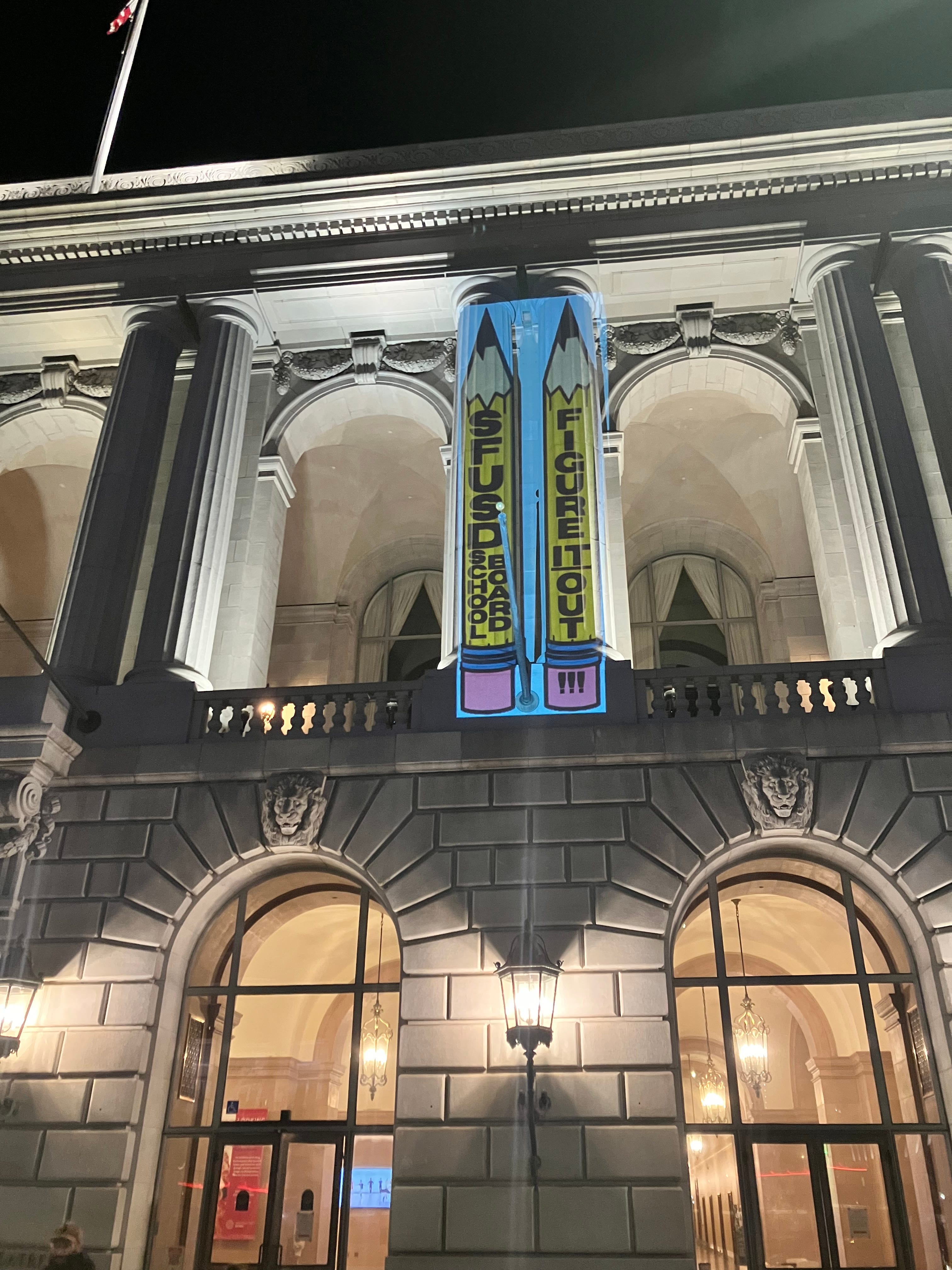
So many of us love San Francisco but it often feels like the city doesn’t love us back. The tech-oligarchs and venture capital billionaires have made this beautiful place profoundly unwelcoming to ordinary people. But this past week, as I biked around the city, and heard the honks, and sat in picket captain meetings every night hearing about the loving way that San Franciscans came out to support their schools, it finally felt like the city was ours again.
A city of austerity and instability is not an inevitability — it is a choice. And what San Franciscans won through this strike was the possibility of a different choice - stability, investment, care. Tens of thousands of San Franciscans flooded the streets every day - from North Beach to the Bayview — and showed that a different future is possible.
Will have to check out that war memorial, don't remember ever seeing that. Glad the strike didn't last long. But I've got to say, how did you injure your finger riding a bike. All the bell clanging? That's a good thing because I hate when I'm walking and the biker sneaks up on you. Been in trail arguments because I've yelled "On your left asshole!" when they silently swooshed by. I try not to do that anymore because it really doesn't help. lol