Ruth Asawa’s San Francisco

There’s a retrospective at SFMOMA right now on one of San Francisco’s most famous artists - Ruth Asawa. She’s probably best known for her looped wire sculptures, but what I really loved about this exhibit were her drawings and paintings of plants and fruit. Who knew a bowl of cherries could be so charming?


San Francisco and Northern California were a source of artistic inspiration and her love for this city ran deep. So after seeing the exhibit (which goes to New York next — I highly recommend seeing it!) I decided to take a walk through Ruth Asawa’s San Francisco.
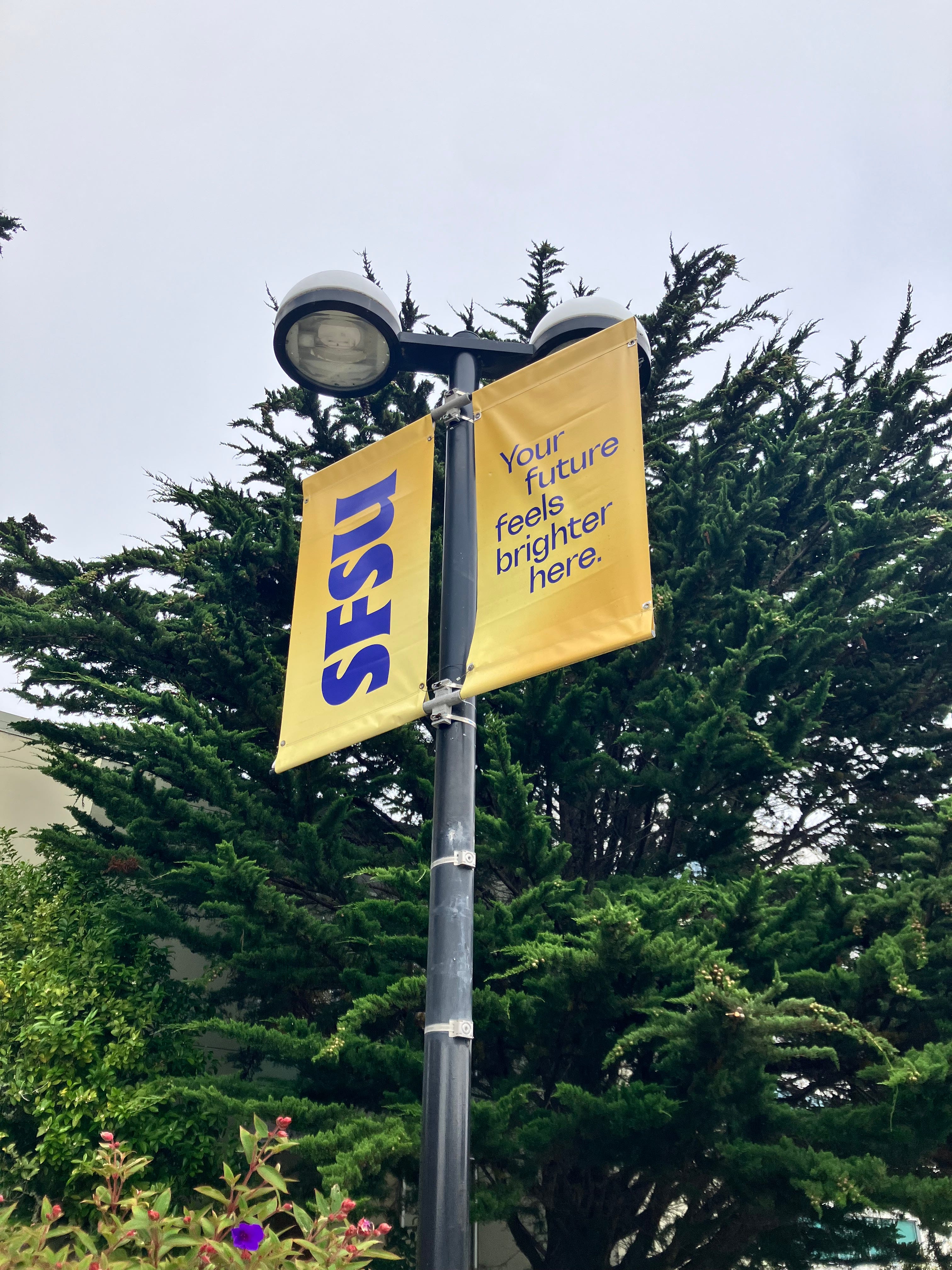
I took a bus and then a long Muni train ride out to San Francisco State, in the Southwest corner of the city. The first thing I noticed as I walked onto campus were the banners saying “your future feels brighter here.” A funny slogan for what’s probably the foggiest part of the city. That day was no exception.
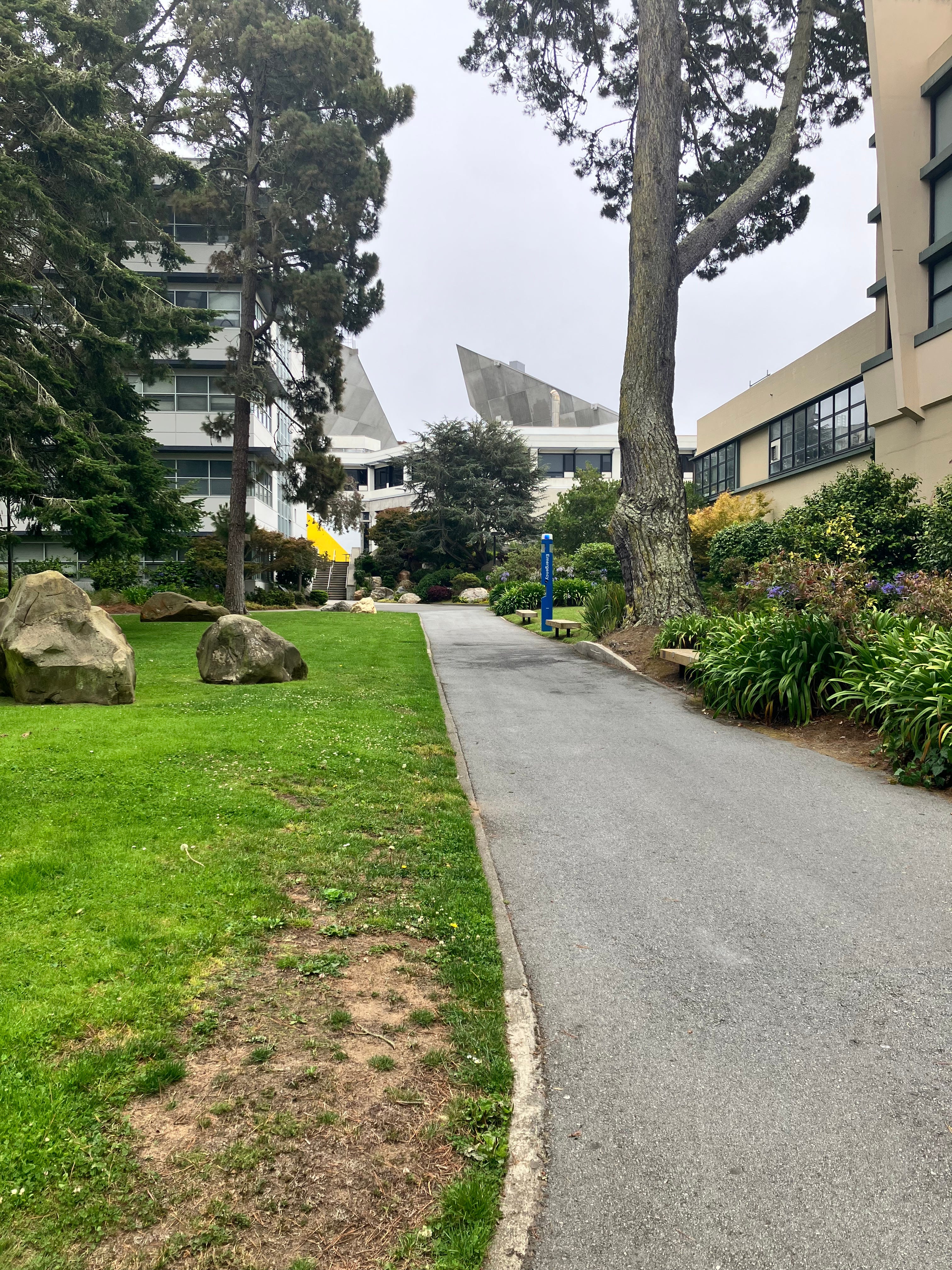
I don’t know who designs college campuses, but they all seem built to purposefully confuse outsiders and first-years (what we called freshmen at my all-women’s college). So it took me a while to find my first stop of the day. After a couple of false starts around various quads and student centers and science buildings, I finally came to a staircase that led down into a larger courtyard completely enclosed by academic buildings.
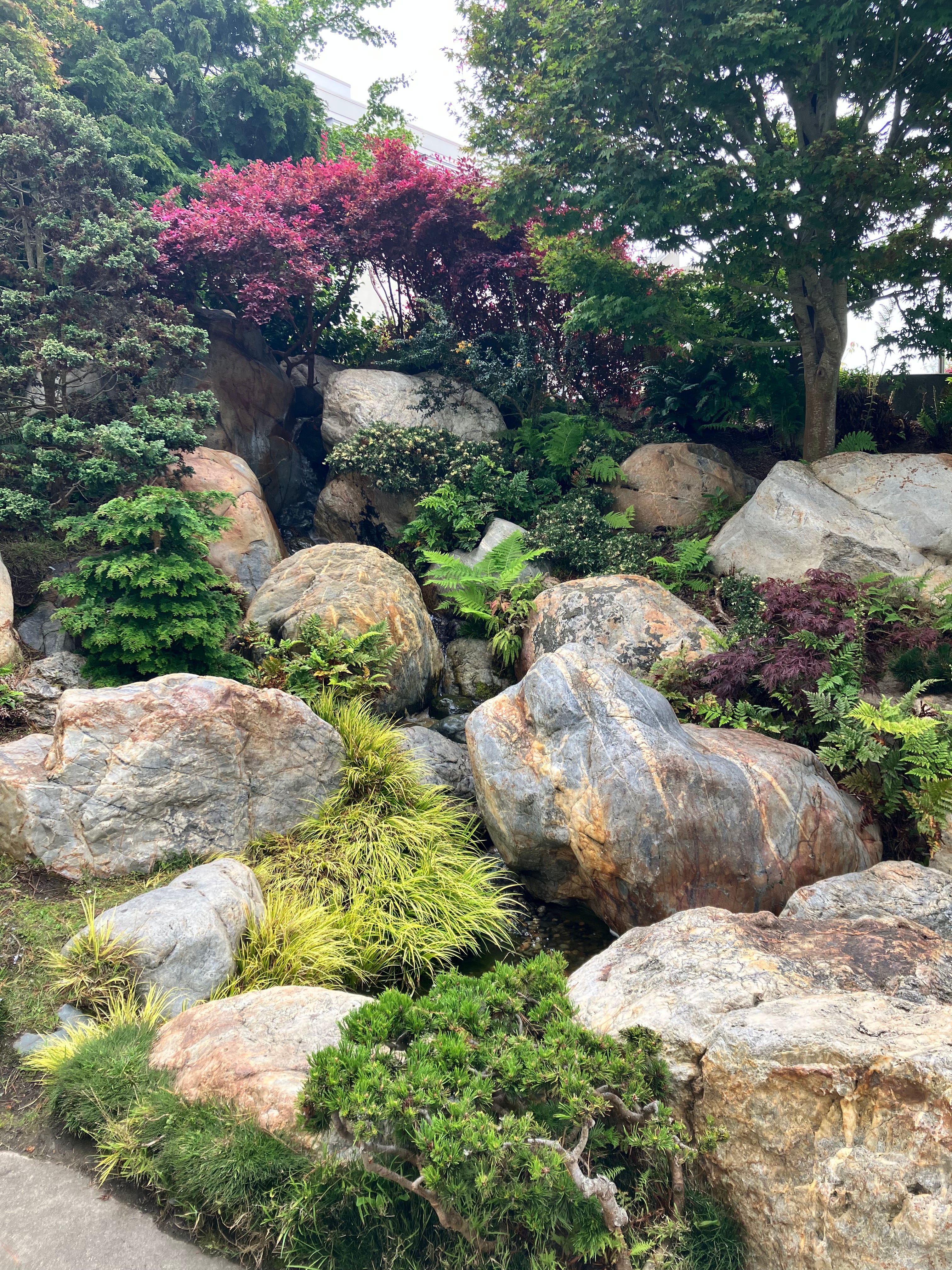
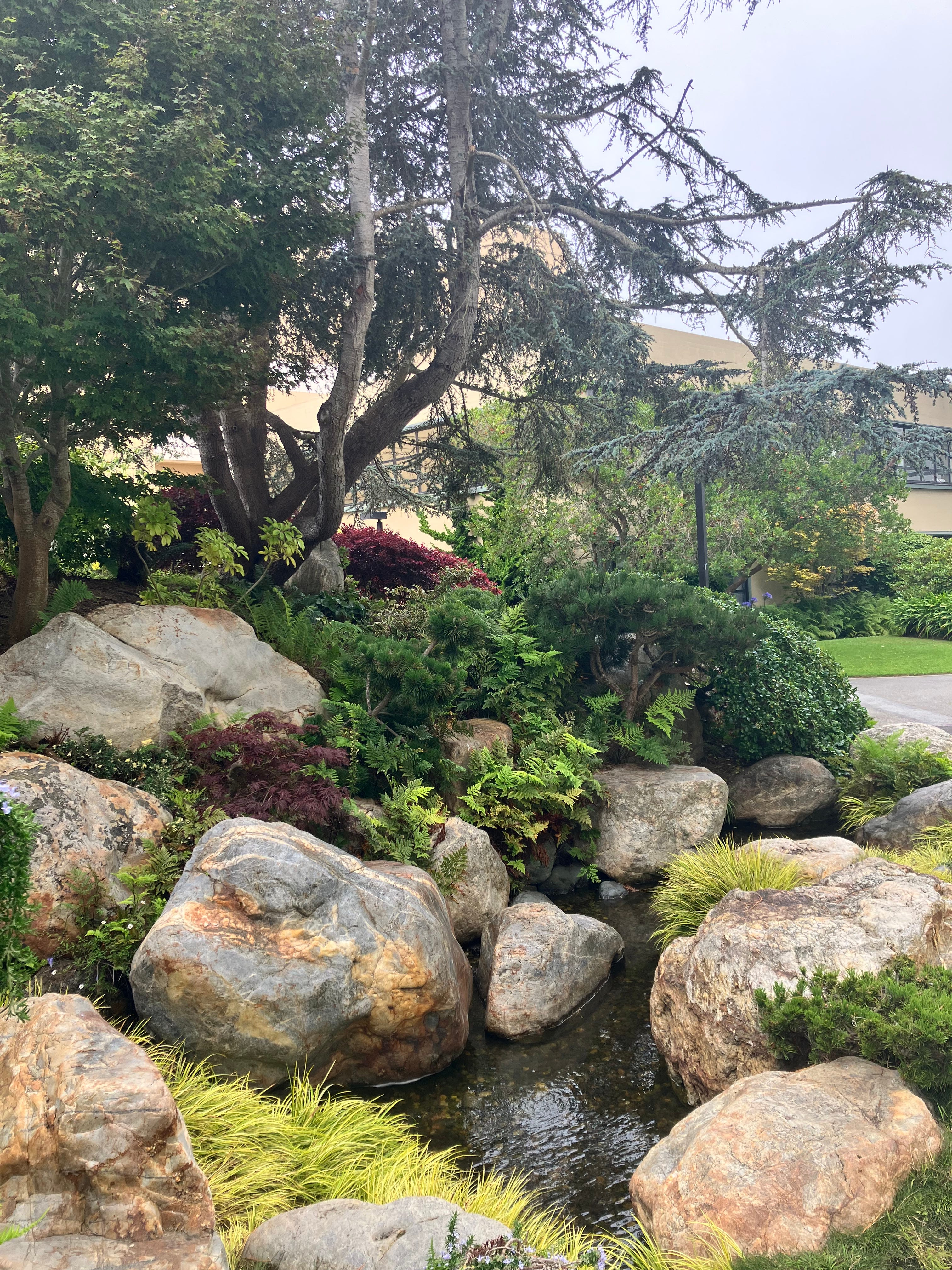
Ruth Asawa’s Garden of Remembrance ran along the staircase - a peaceful place inspired by Japanese landscaping traditions. It had a waterfall, a beautiful red Japanese Maple tree, evergreens, ferns, and large, carefully placed boulders.
I circled it a number of times, surprised that there was no sign that it was designed by Ruth Asawa, no explanation of why it was there. I finally found a weathered, often unreadable sign etched in metal off to the side that gave the explanation.


The Garden of Remembrance honors the 19 Japanese-American students forced to withdraw from San Francisco State during World War II; many of the 19 were among the 120,000 people of Japanese descent incarcerated in internment camps. Those internees also included Asawa and her family.
Asawa’s father was taken first. Then Ruth, her mother, and her five siblings were interred at the Santa Ana Racetrack for five months, living in two horse stalls. Former Disney animators were also unlawfully detained at the racetrack; they taught art in the grandstands and teenage Ruth started to get serious about becoming an artist. Ruth, her mother, and her siblings were eventually moved to an internment camp in Arkansas.
Asawa’s own personal history makes the Garden of Remembrance a particularly poignant piece of art. The internment camp where she was unjustly detained in Arkansas was one of ten such camps, represented by ten boulders on the grassy quad that leads to the Garden, spread out in roughly the pattern that they were dispersed in across the United States.
The surviving Japanese-American students who were dis-enrolled from San Francisco State during World War II were recognized as “honored alumni” during commencement ceremonies in 1998, and the Garden of Remembrance is dedicated to them and to the faculty and staff who supported them in the 1940s. For Asawa, this piece of art was also a symbol of the resilience and beauty of the Japanese-American community — the waterfall and plants symbolizing renewal and joy.
We build these memorials to atone, to remember, to say never again, but as I looked at the Garden, it was hard not to think of our neighbors currently being snatched off the streets and unlawfully, unjustly detained in inhumane conditions by an ever-growing army of federal thugs. As the school year starts and the teachers I work with make plans for what to do if ICE comes after their students, I think about the faculty and staff at SF State that helped the Japanese-American students back in the 1940s. Perhaps these memorials are also a reminder that people fought back, and that the fight is not futile — it’s an obligation we have to each other and our collective future.
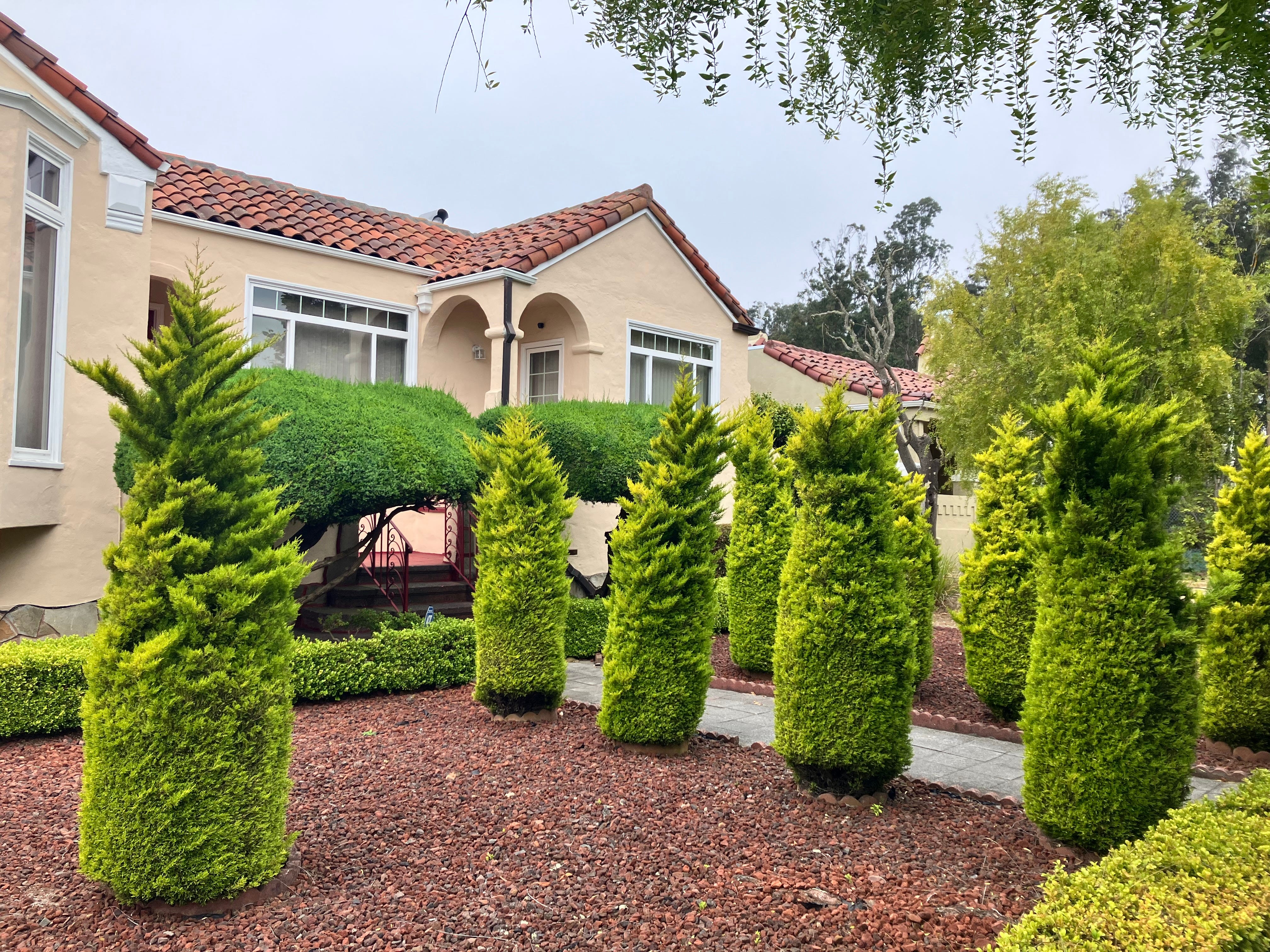
I winded my way out of the San Francisco State campus and walked along busy 19th Avenue, past the Stonestown Mall and the little houses with front yards (an unusual sight in this city), pausing occasionally to admire the…interesting…ornamental plant choices.
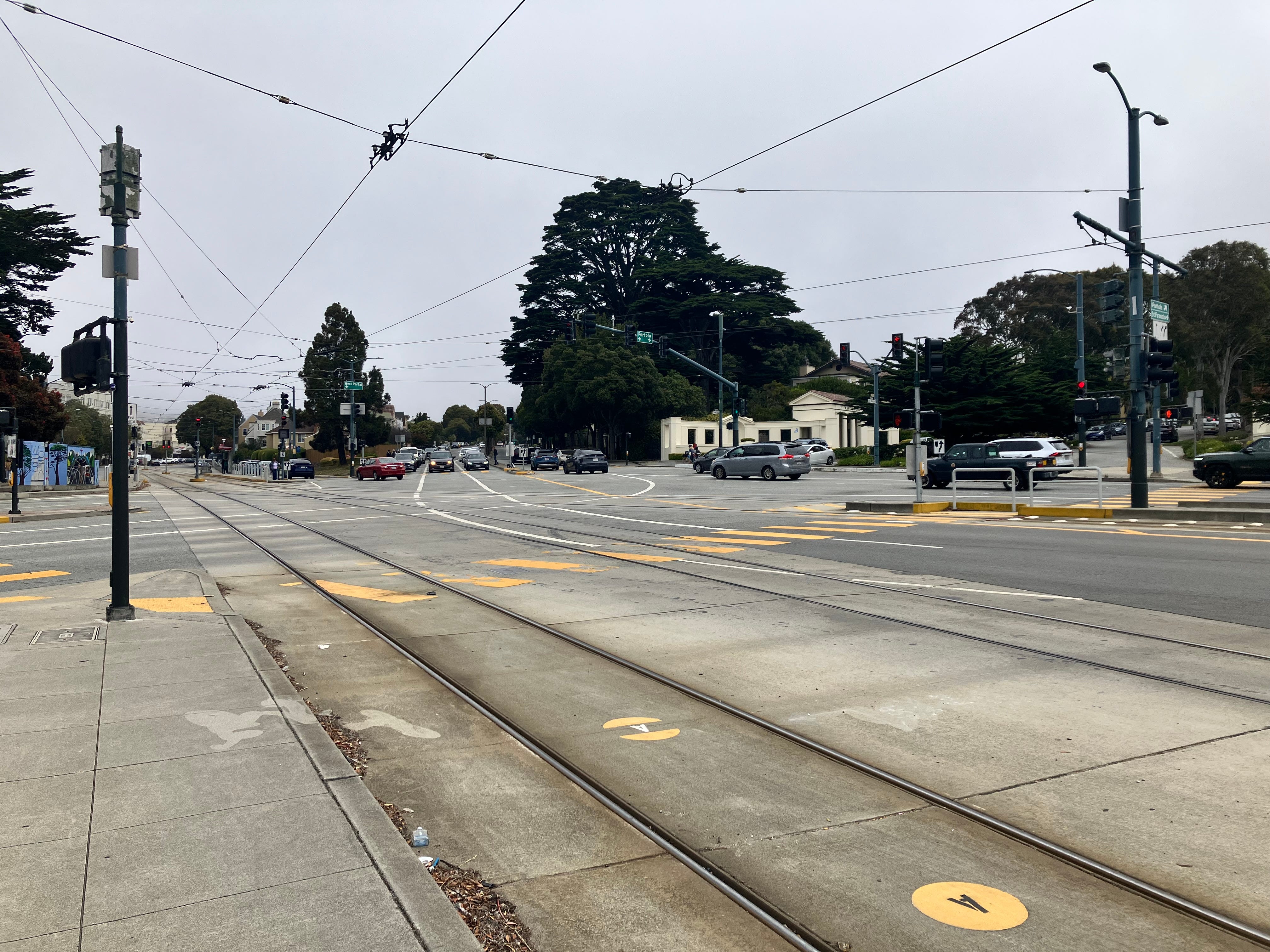
Then I came to what might be the worst intersection in San Francisco, where two Muni train lines and three multi-lane boulevards converge with a few other streets. It always feels unsafe as a driver and as a pedestrian, and it took about seven minutes to cross it.