
Stay Golden

Last week, Andy took me to his favorite spot on the Yuba River in the Sierra Mountains. The Yuba is really three rivers that start high in the Sierras, fed by spring snow melt, and eventually merge into one.
After a few hours of driving, we parked by the side of the road and got ready to hike. The air had that very specific and wonderful smell and feel of the Sierras — piney, dusty, dry, hot, with the subtle hint of the fuzzy, white California Buckthorn that was in bloom.
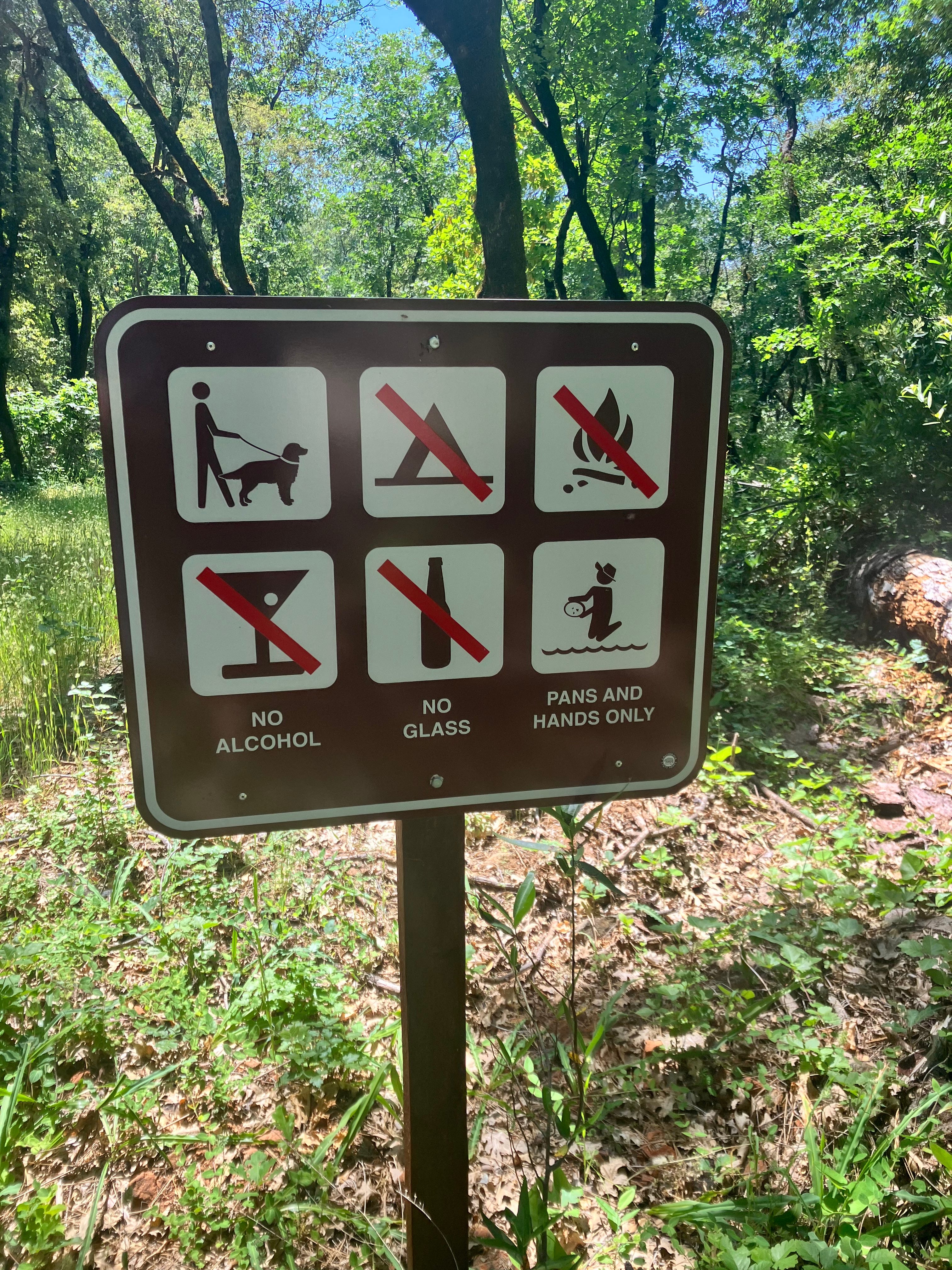
We started down a wide, shaded trail. Lizards darted in and out of the foliage. Ahead was a sign you see at most parks with all of the rules — but this one had a twist. Next to the usuals — no fires, no camping, etc. — there was a new one to me: “pans and hands only.” The spirit of the 1849 Gold Rush lives on….
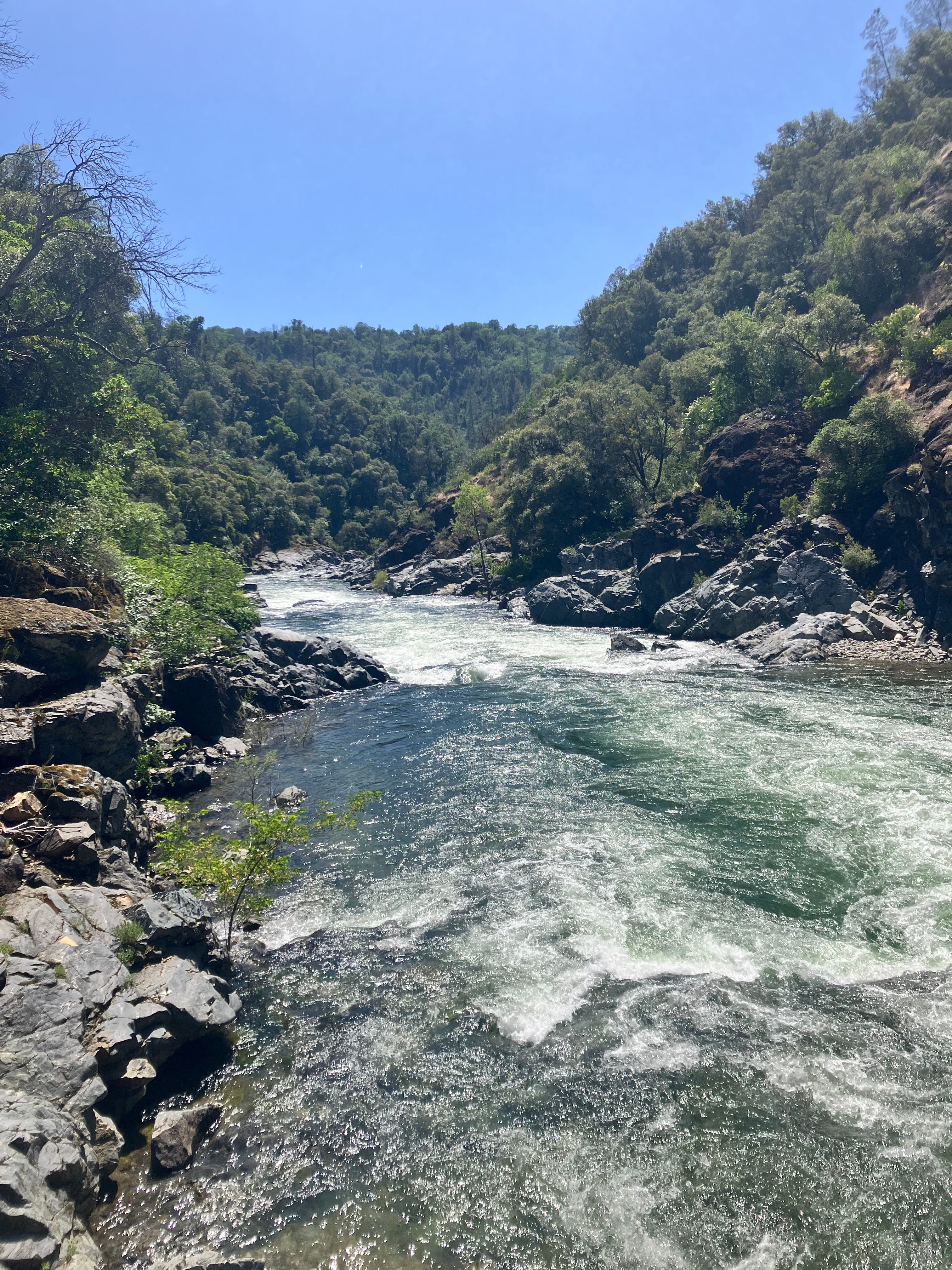
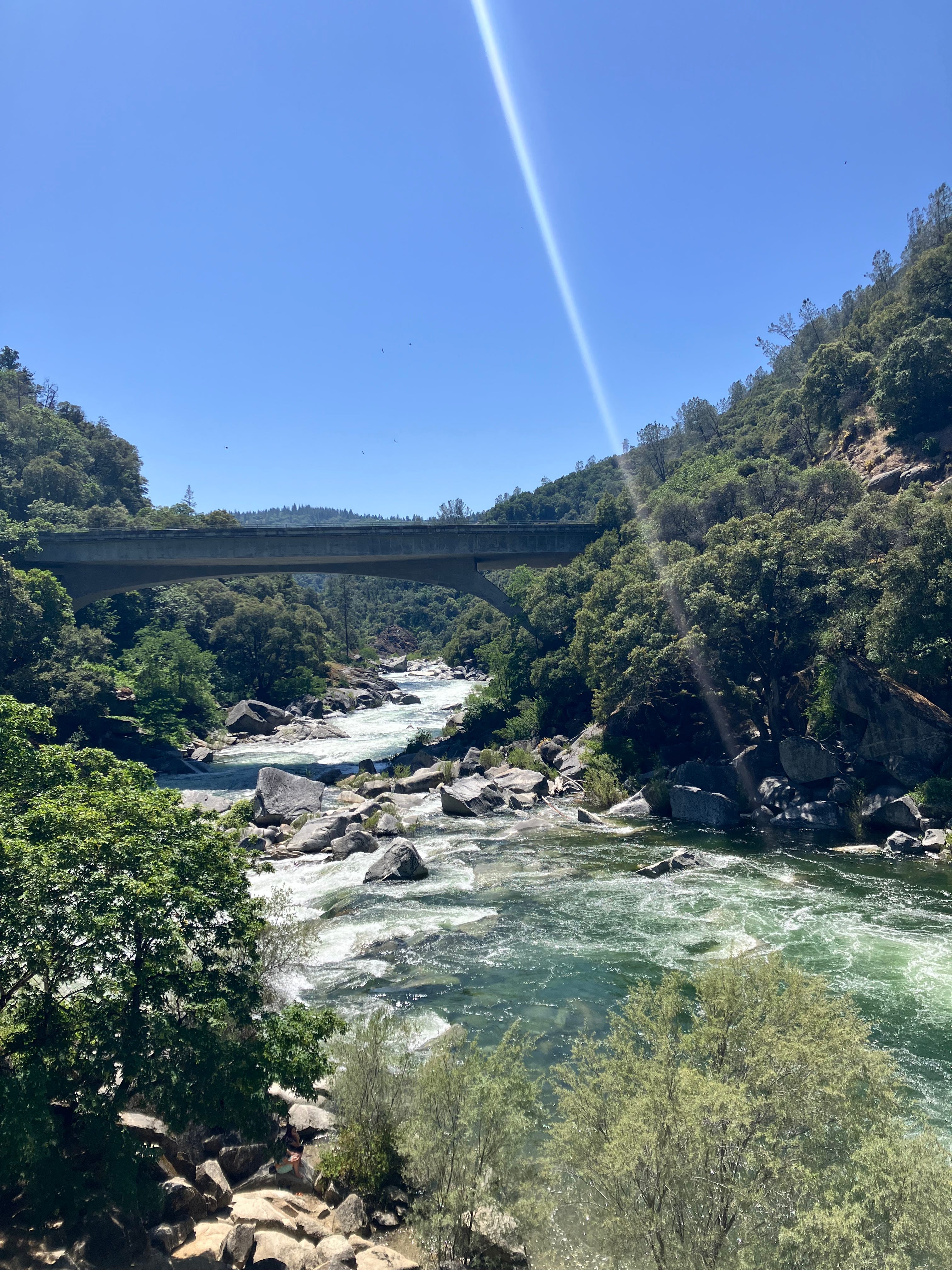
We hiked down a steep and increasingly narrow trail choked with poison oak until we got to the river. The water was high and fast — it looked like the perfect spot for whitewater rafting. Andy couldn’t believe it — the shallow, placid pools he’d enjoyed on previous visits were gone.
After scrambling over sunny boulders (and carefully heeding Andy’s warnings to watch out for snakes) we finally got to a little calm spot at the edge of the river and put our feet in the water. It was freezing, shocking Andy once again.
As it turns out, rivers change. Andy usually visited the Yuba in late June or July, and the years he visited were also drought years. We were visiting a month earlier than he usually did and Northern California is (for once) not in a drought, so the Yuba is almost unrecognizable, still running high and cold from the snow melt further up the mountains.


We let our feet dangle in the water for as long as we could stand it and admired the beautiful clear water, the dramatic steep riverbank, and the dozens of red tailed hawks that circled high overhead. Eventually, the 40 degree temperature difference between the hot rocks we sat on and the cold water of the river became too much, and we headed back to the shade of the trail. At the trailhead was a magnificent storm of black and white striped butterflies - a spectacular sendoff.
We got back in the car headed down the road to the South Yuba River State Park. The elevation was lower, the banks of the river more broad and shallow - not the rushing and roaring canyon we saw upstream. We headed to the pretty covered bridge that used to be a toll bridge. The prices seemed astonishingly high for the 1850s — $6 for a carriage with eight horses! That’s what it cost to cross the Bay Bridge when I moved to San Francisco!
Next to the bridge was what I can only describe as a Very California Scene. A shirtless man was wandering around, playing new agey music on a wooden flute. Other musicians were sprinkled down the riverbank and fully clothed people were in the water.
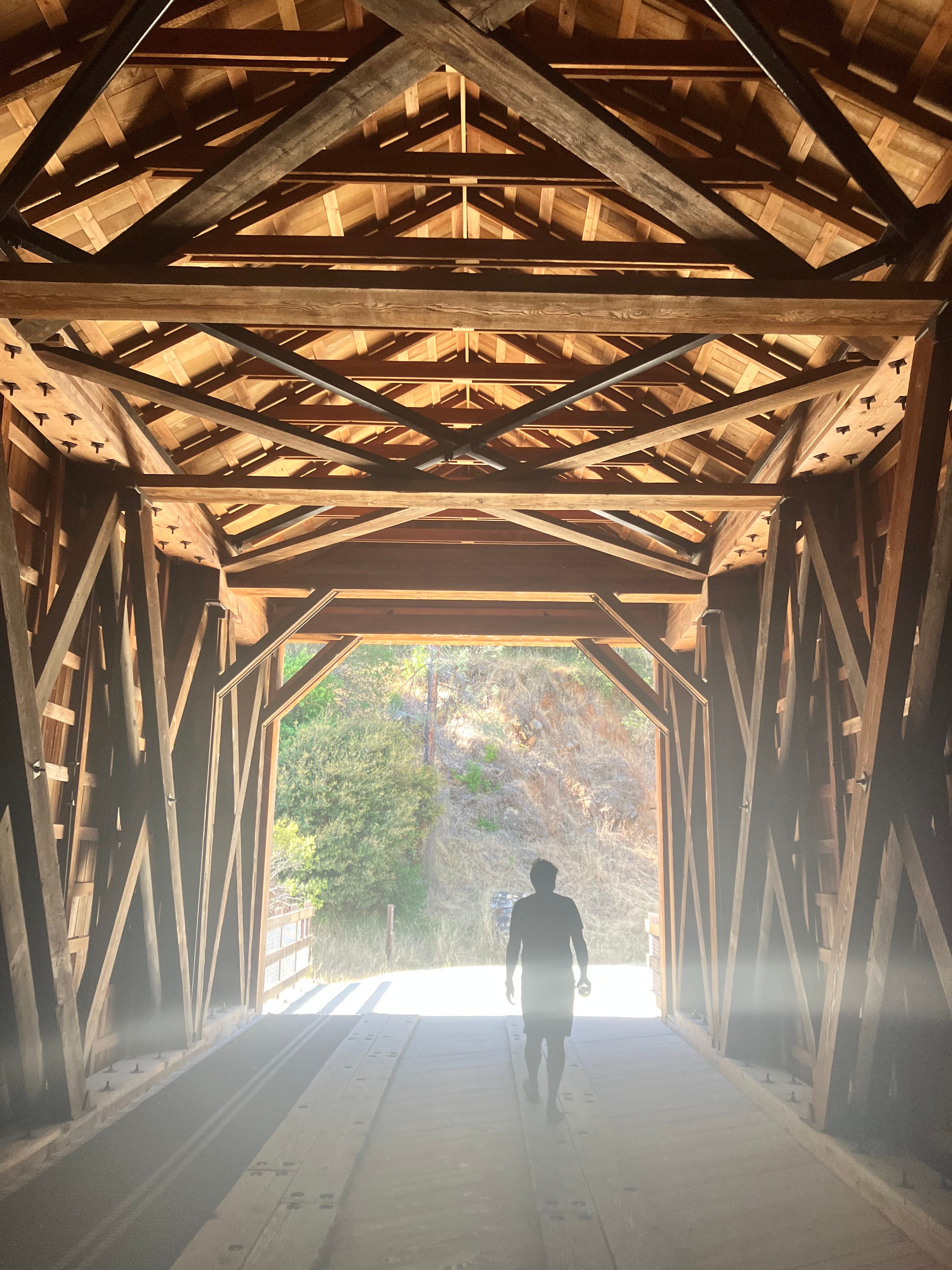
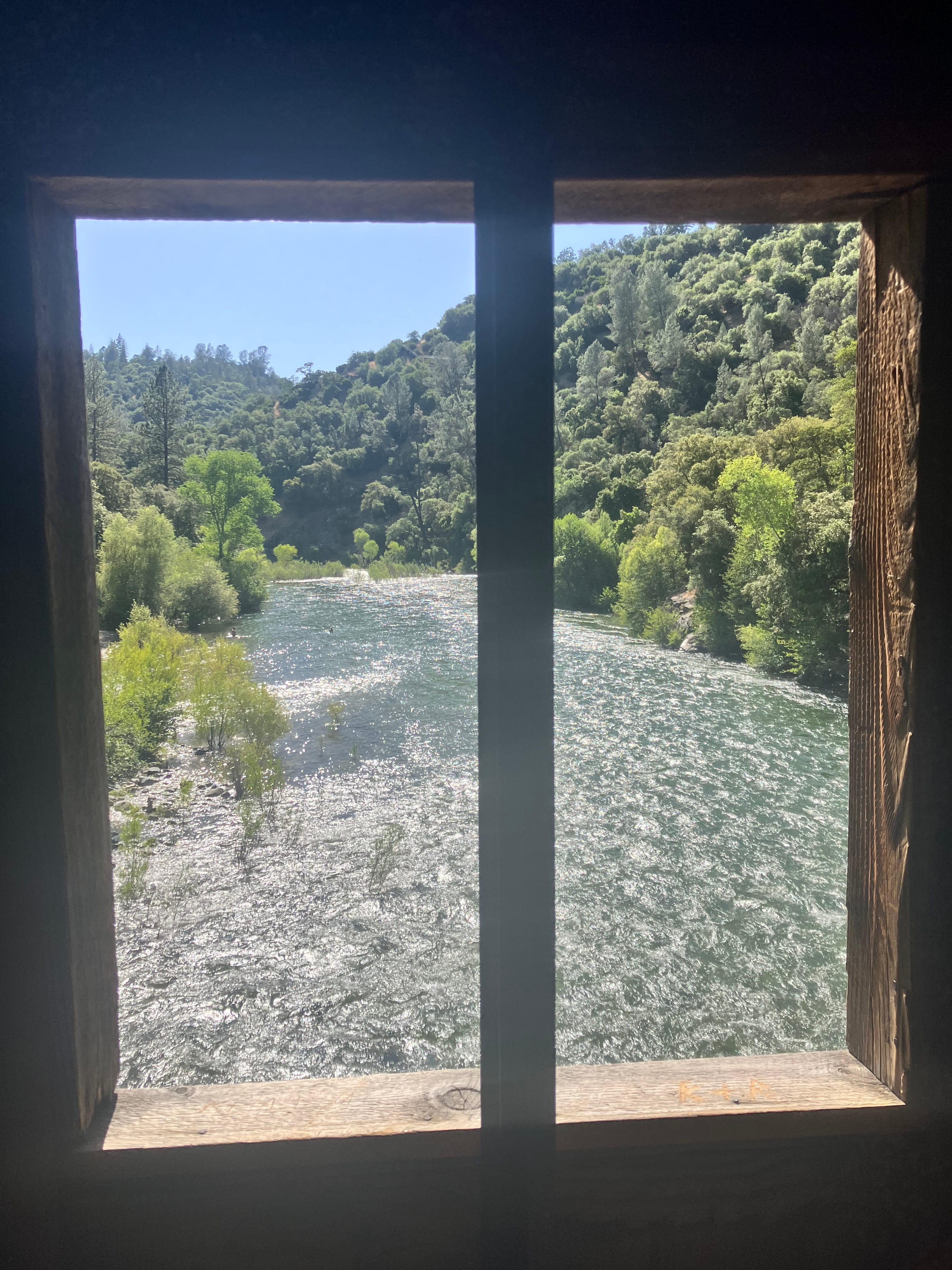
Unfazed, we crossed the bridge, which was made of old Redwoods. The smell in the bridge was intoxicating. The late afternoon light filtered through the windows and everything felt warm and cozy and dusty, like an old library.
We climbed down to the riverbank on the other side of the bridge - it was shallow and sandy, unlike the deep pools surrounded by granite from earlier in the day, but the water was still incredibly cold. Looking across the river, we got a better view of the band and the people in the river doing what looked like some sort of wedding photo-shoot that was so PDA-filled that we decided to turn back rather than subject ourselves to it.
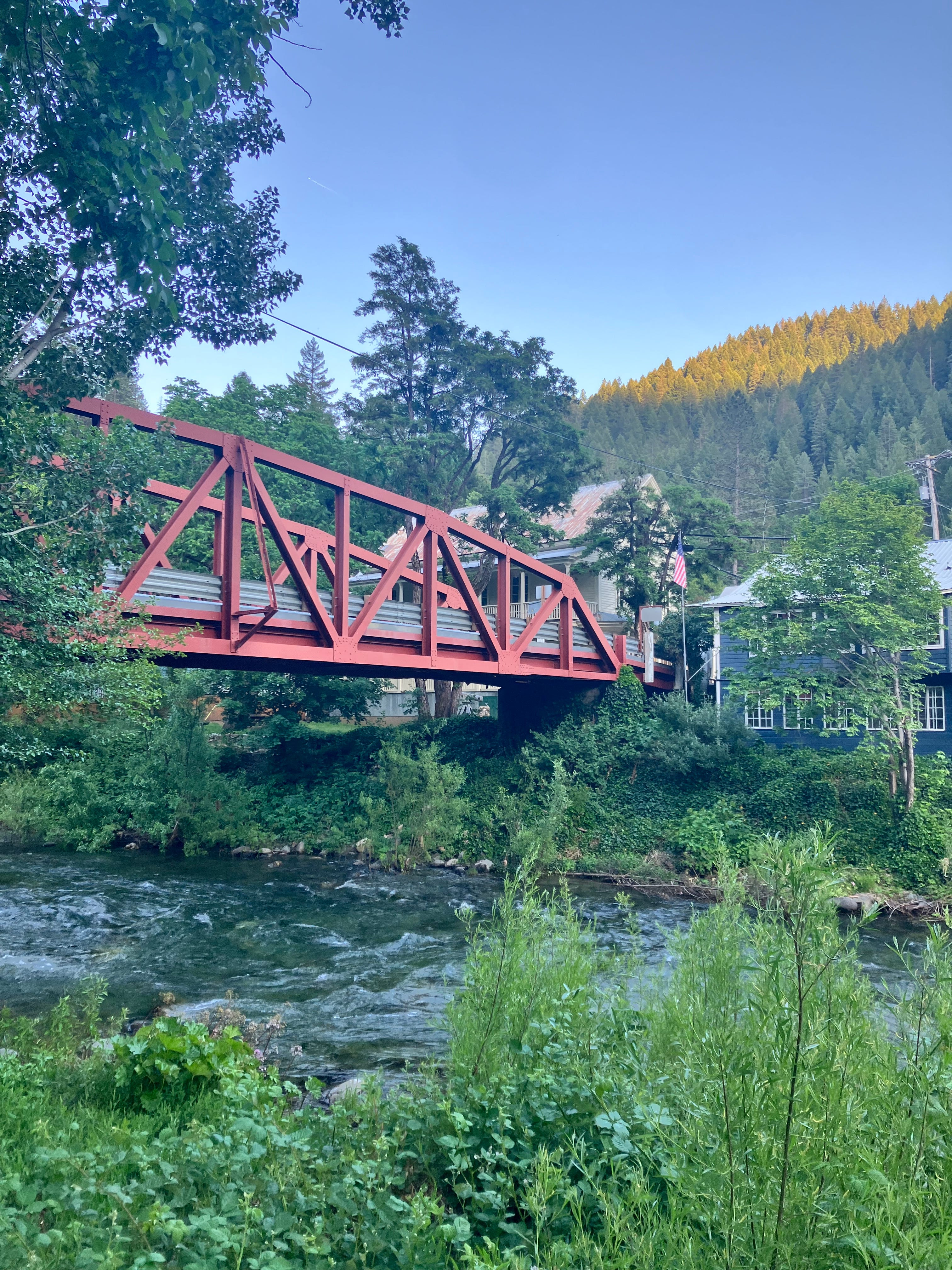
That night, we stayed in Downieville, a Gold Rush era town that was once so booming it only missed becoming the capital of California by a few votes. Now, it’s a town of less than 200 — the most populous town and county seat of Sierra County (population 2,000).
It’s a different California than the one I live in. Guns are everywhere - I lost count of the number displayed at the bar. A local told us during dinner that “this is the type of place where people know how to pack their own bullets and have strong opinions on the best technique.” He also told us there’s tunnels under the town, which were built to get around more easily during the snowy winters (reminds me of the skyways in my hometown of Minneapolis). Given Downieville’s mining history - and the Sierra’s 400+ inches of snowfall every year — I believed his tunnel story, though I politely declined his invitation to check them out.
The history and impact of the Gold Rush feels much closer to the surface on the Yuba than in San Francisco, even though both these parts of California were heavily shaped by gold.
Some of this impact is quite literally on the surface — many of the giant boulders that create the swirling, frothy eddies in the springtime Yuba were deposited in the river due to hydraulic gold mining. Miners would blast the canyon walls with giant high-pressure hoses to get the gold out; the boulders and rocks and gravel would eventually end up in the river.
The impact is below the surface too - in the hundreds of miles of abandoned mine tunnels and the poisoning of groundwater due to old mine waste (like mercury).
You can see the history in the towns (and ghost towns) where 175 year-old saloons and stores still line the main streets. In San Francisco, most buildings from that era were wiped out either by a series of big fires in the late 1800s or by the 1906 earthquake. That earthquake — not the Gold Rush — is the defining event of San Francisco’s psyche. A tragedy and rapid rebirth - the phoenix rising from the ashes.
But up in the Sierras, there was no such dramatic fall and resurrection. Instead, there was a fast and violent assault on the earth and on the Konkow, Maidu, Nisenan and Miwok people who called the Yuba home. The indigenous people uprooted from their land, trees stripped from the mountains, the minerals pulled from the earth, the rivers dammed and the waters diverted to the Central Valley and the Bay Area. And then a slow contraction, as the price of gold changed, the easily-accessed gold dwindled, and environmental and safety regulations were put in place.
There’s still some gold mining up here — amateurs and small-scale operations. But most of the mining done now is of Gold Rush history — stories of a wild west to tell tourists. Stories of what made California the Golden State.
Pans and hands only sounds like a spanking party! lol. Sounds like a good walk