
The Necropolis
A walk in Colma

Last week I went on a “suburban day,” as my sister calls it, to do errands at various big box stores. I drove down the Peninsula, finding a spot in front of the Colma City Hall to charge my car.1
While I was waiting for my car to charge, I decided to walk to one of said big box stores and cross some things off my list. And this is when I was reminded that Colma is a profoundly strange town.
Colma is a necropolis — home to sixteen2 cemeteries holding millions of “underground residents” but less than 2,000 above-ground ones. Cemeteries cover 75% of the land in this little town. It is a city for the dead.
I left city hall and turned down El Camino Real, a busy thoroughfare. The day was gray and humid and a bit drizzly at times, shrouding San Bruno Mountain in a mist. It’s often foggy in Colma, which feels fitting.
The first business I passed was a monument showroom and manufacturer. At the front of the building were gravestones of various levels of ornateness — some blank and some filled in. Many were in Chinese. A few featured photos of the departed. An eerie display of wares. Next door was a flower shop full of sunflowers - it looked more festive fall than funereal. Still, the flower shop fit in with the theme; this was death’s company town.


In fact, calling Colma “death’s company town” isn’t far off. The town was incorporated at the behest of cemetery owners in 1924. But how did so many cemeteries end up in the area in the first place?
Thanks to the Gold Rush, San Francisco’s population exploded and cemeteries in the city started running out of space. In the late 1800s, the Catholic Church opened a new cemetery in what is now Colma — a convenient location just a few miles south of San Francisco. The land was mostly agricultural so the Church, soon followed by many others, bought up farmland and turned it into a cemetery.
By 1900, San Francisco banned burying any new bodies in the city limits. But the city’s growth was rapacious - the government wanted to use the land of its small city for the living not the dead. In 1914, San Francisco essentially evicted all of the cemeteries, ordering the graves and bodies moved to Colma.
The moving of graves was performed with various levels of care. Some bodies and their gravestones were moved together and carefully re-interred in Colma. But more often, bodies were simply dug up and put into mass graves. Horrifyingly, sometimes the bodies weren’t moved at all; only the gravestones were relocated.
This enormous project seems to have been done with little respect. Gravestones and monuments that were broken during the removal process were often used for building projects - a cheap source of material. You can see gravestones paving the gutters of Buena Vista Park or as part of the pier at the Wave Organ in the Marina.
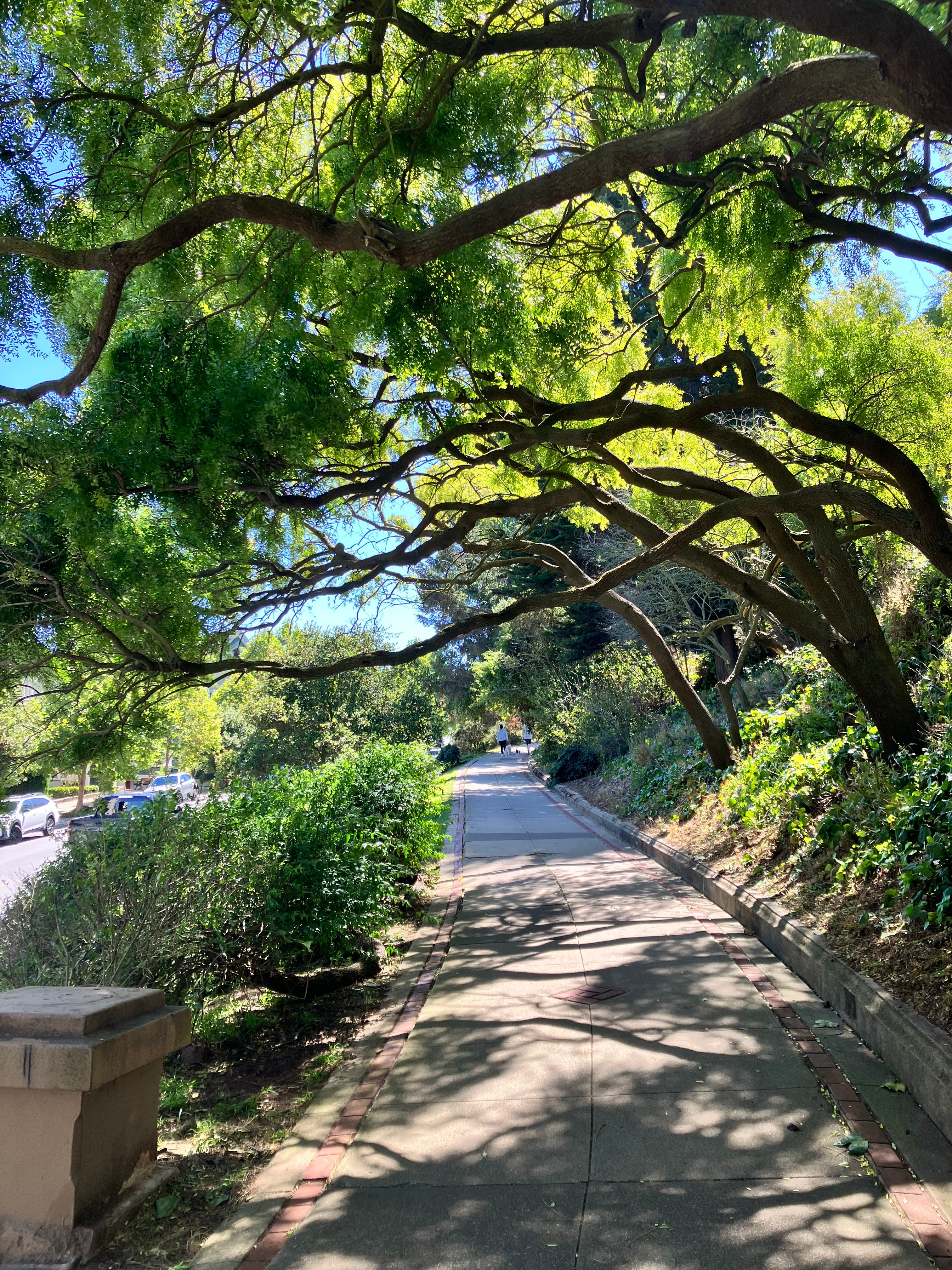
While gravestones and bodies are still all over the city, only two official cemeteries remain in San Francisco — one small one at the Mission and a large military cemetery in the Presidio.
The removal of cemeteries from San Francisco is so emblematic of the cruel side of the city. Its rapacious need for growth at all costs. Its tendency to privilege real estate over people’s lives. Let’s not forget — moving the dead had an impact on the living. Families couldn’t visit the graves of their loved ones, either because they were moved far away or the family didn’t know where they ended up. Families and friends pinched pennies to pay for a memorial to their dearly departed, only to see it used as rubble for a building project. A whole new cycle of grief. A horrific chapter of our city’s history.
San Francisco’s callousness brings us back to the creation of Colma. As the cemeteries in Colma expanded, the cemetery owners became concerned that San Francisco would try and annex their land to grow the city. Thus Colma was incorporated as a town — to protect its most important business.
After walking past the death-adjacent businesses, I came to my first cemetery — Greek Orthodox Memorial Park. It was simple and shabby; a few graves with ramshackle flowers and decorations and an overflowing trashcan. Seeing the deflated balloons and faded fake flowers right next to the busy road was a depressing sight.


The next cemetery, Greenlawn Memorial Park, looked a bit more well-cared for. I turned off the busy El Camino Real onto a side street that winded its way next to Greenlawn, with its larger monuments and green grass and palm trees.
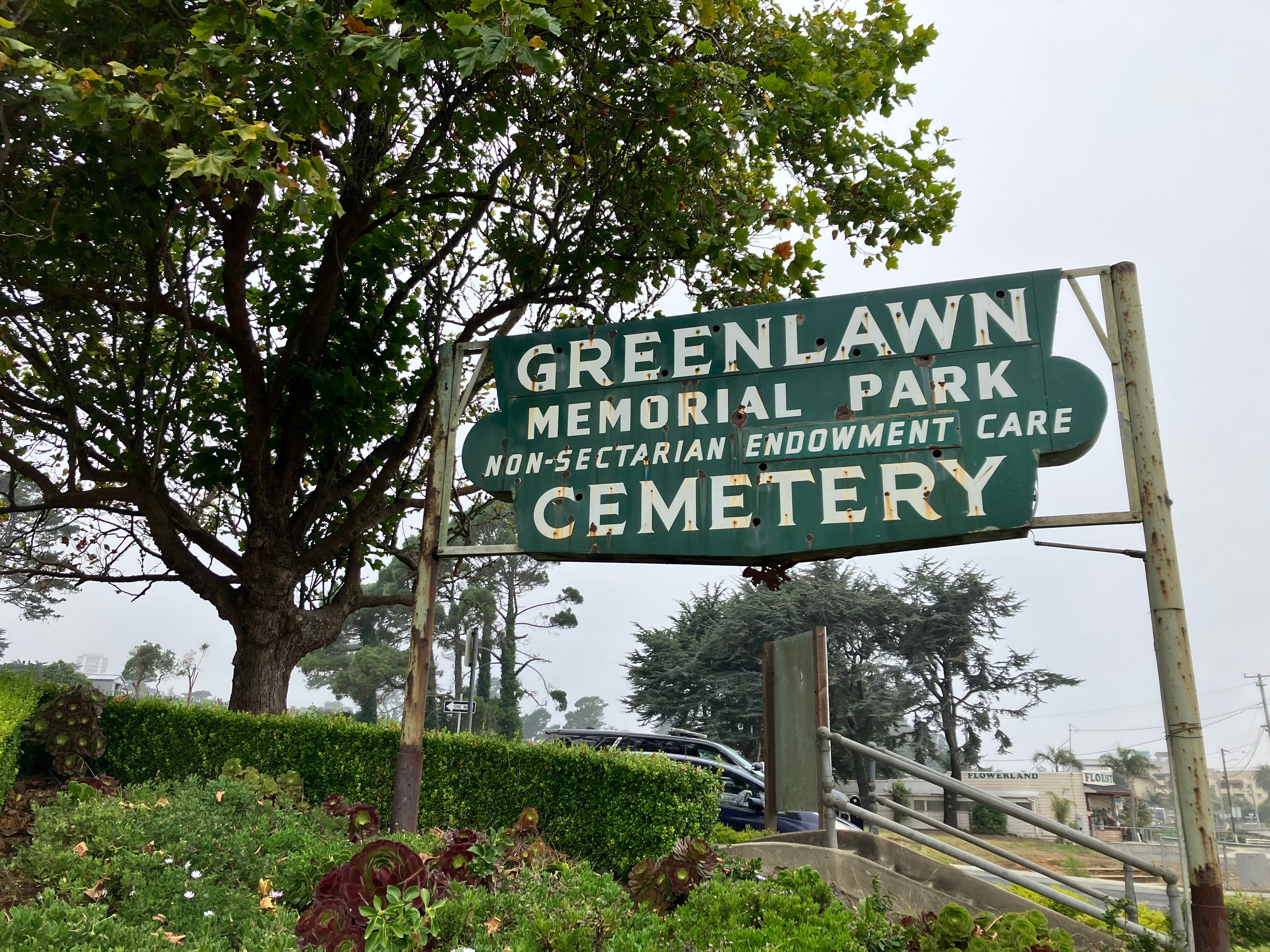
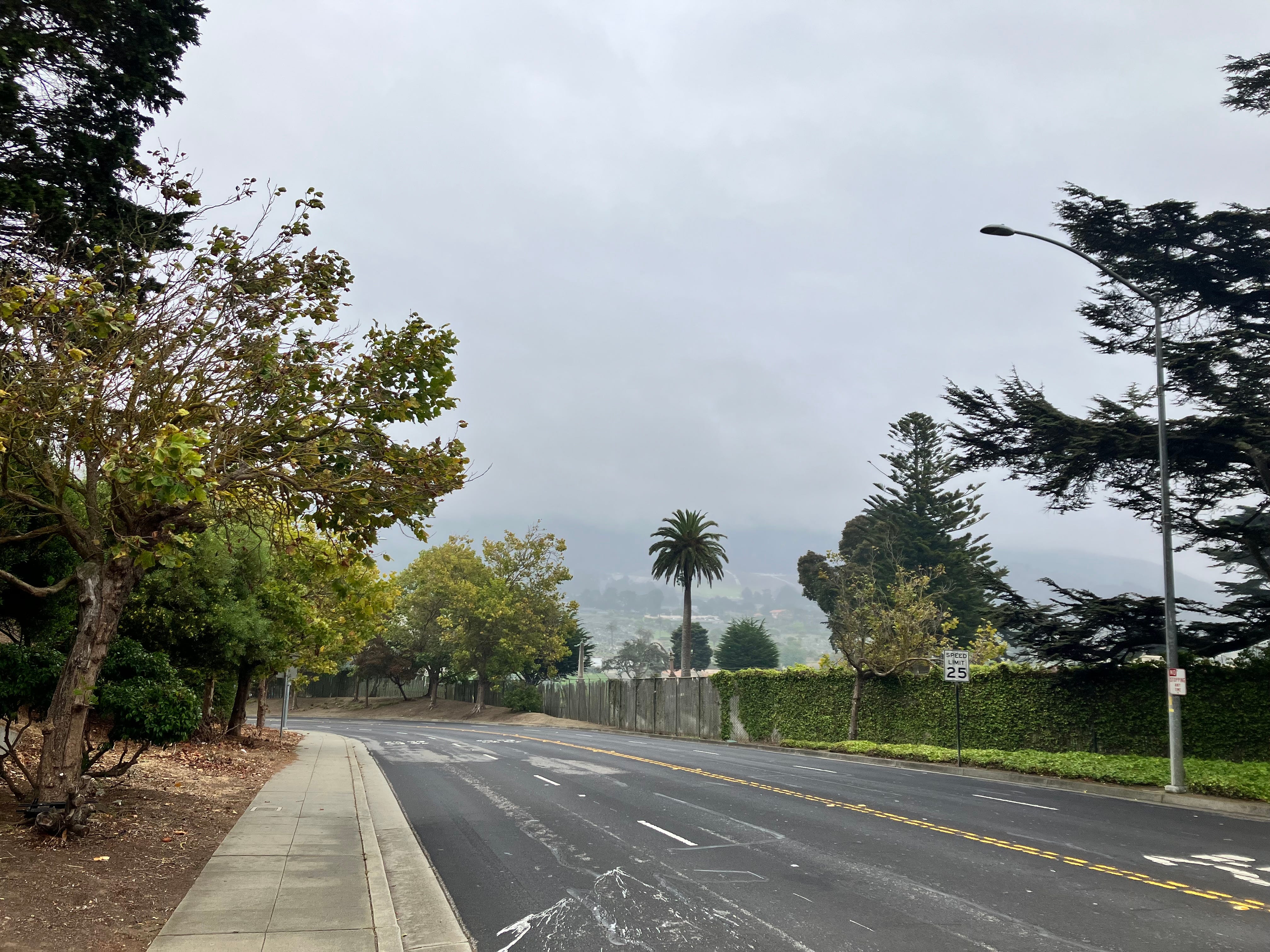
After a curve in the road, the cemeteries transitioned to big box stores. A scattering of day laborers were near the entrance of a Home Depot. It was already past noon on a Sunday; I wondered if any of those folks got work. I passed a Raising Caine’s, music blasting from the windows of the cars in the drive-thru. I turned into the shopping plaza, did a few errands, and turned around to walk back.
The weather became more misty, and the humidity made me feel clammy. Both the inside and outside of my rain jacket were damp. But the view was incredible; down a gently sloping hill spread with cemeteries and out to San Bruno mountain — lush and green but also gray with mist.
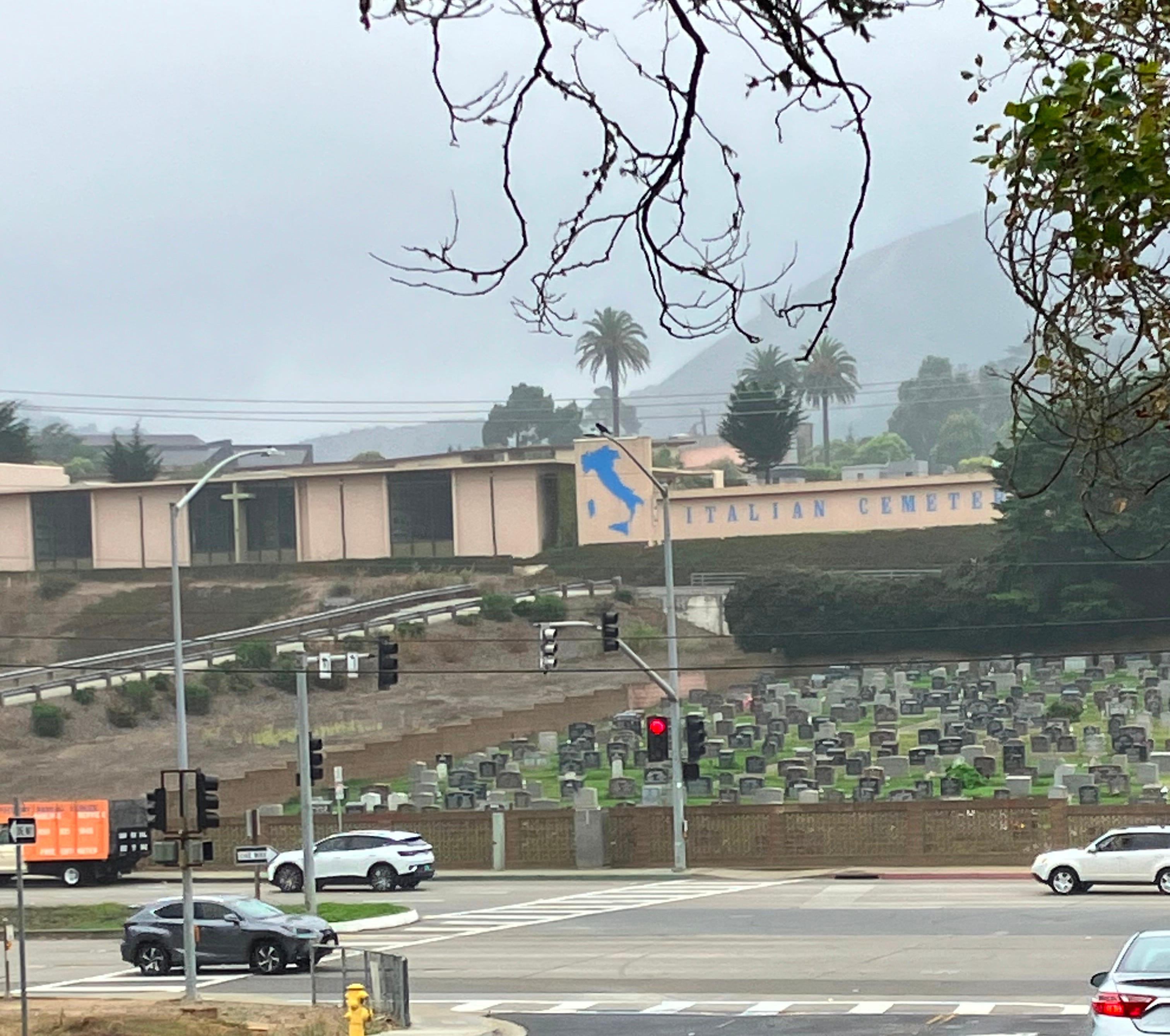
I turned back onto El Camino Real, noticing the spread of the Italian Cemetery before me. The Italian Cemetery was started by La Società Italiana di Mutua Beneficenza, an Italian immigrant mutual aid society which provided medical care and death benefits. In the late 1800s, the society purchased land for a cemetery in Colma, joining a host of other immigrant organizations like the Jikei-kai Japanese Benevolent Society and the First Serbian Benevolent Society that set up cemeteries there. Most of these cemeteries now bury people of all faiths and nationalities.
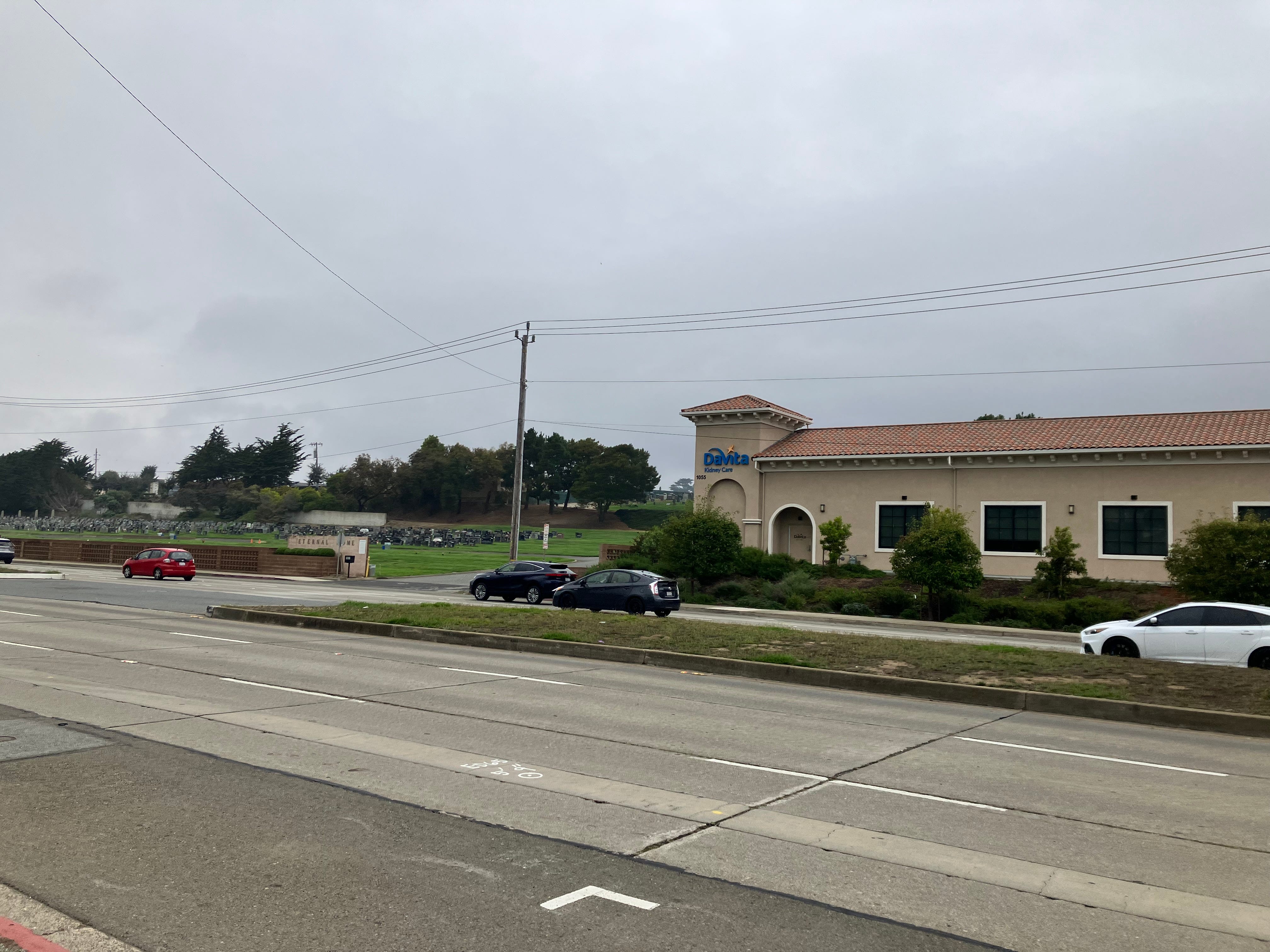
I ended my walk back at City Hall, across from a DaVita Dialysis Center, which is next to yet another graveyard. A grim place to be a patient for many reasons. Perhaps those patients look out onto the cemetery and take comfort in the town’s unofficial motto — it’s a great day to be alive in Colma!3
Long time readers will know that I actually hate my electric car and that eliminating cars rather than switching their power source is the real solution but I will not bore you further with this footnote — you can read more of my car-free thoughts here.
There used to be 17 cemeteries but one got made into a golf course. It was the paupers’ field and the bodies were never moved; a stark reminder of how our society tramples over the poor whether they’re alive or dead.
Yes, the exclamation point is part of the motto.
I love the unofficial town motto. And I liked the sad parts too